How Specifications Enable Tree Care Estimating and Management
ANSI A300 Standards Create Clarity for Customers and Crews



Miscommunication is one of the biggest stumbling blocks for tree care companies. Crews’ technical skill can be top-notch, but even stellar execution won’t salvage the damage caused by mismatched expectations between customers and crews. Vague language during estimating and sales can turn a straightforward job into a callback, dispute, or damaged relationship.
Employing the ANSI A300 standards ensures estimators can communicate the technicalities of the work clearly to non-experts. The A300 standards outline how to develop clear, consistent specifications for tree care work, providing guidelines for how to express the particulars of pruning, fertilizing, or managing trees. This language puts estimators, clients, and crews on the same page, increasing efficiency, safety, professionalism, and profitability.
“Those are incredibly important tools,” said Dane Buell, longtime arborist and former chair of the A300 committee. “They’re underused in our industry. They’re misunderstood. We’ve got the playbook in front of us — pick it up and use it.”
A300 standards in action
Tree care companies of all sizes can benefit from applying the A300 standards to create specifications that consumers understand and crews can execute.
“The industry has not gotten their head around the fact that these are standards for the development of specifications,” Buell said. “They don’t tell you how to prune a tree.”
This distinction is vital. Companies may claim in proposals that they will perform work “to A300 standards,” but might offer little more detail than “prune all 22 trees in the yard.” Detailing how work will be performed to A300 standards requires specific language about exactly what kinds of cuts will be made to which species, and other exacting specifics. Vagueness undermines clarity and can damage credibility.
The elements of a clear specification
The A300 standards advise that every specification should clearly define the work’s objective, method, and measurement or “dosage.” This allows estimators to define the reason for the work, the actions the crew will take to complete the work, and the extent to which those actions will be applied to a given tree.
“These are the minimum,” Buell said. “There are certain things that have to be included in the estimate to understand what’s really going to happen.”
This framework prompts estimators to think more deliberately and communicate more precisely.
Objective: Providing customers with the service they are paying for requires defining an objective, which answers the key question: What problem are we solving? Examples include increasing building or utility line clearance, reducing risk, and boosting visibility.
Method: The specification should define how the crew will perform the work. In pruning, this means specifying a particular approach such as reduction cuts, removal cuts, thinning, heading, or shearing. Each of these actions affects tree health, structure, and appearance.
Measurement: The specification should include a measurable goal for each action, such as what size of branches to cut, how many inches to remove, or how much clearance to maintain around a roof or power line.
A complete specification might read: Provide building clearance on one red maple located at the northwest corner of the house. Use reduction and removal cuts to achieve 5-10 feet of clearance from the structure.
“We’re going to clearly communicate to the consumer, ‘Why are we doing this?’” Buell explained. “When the job is complete, you can go back and say, ‘Did we accomplish this?’ That’s what a well-written specification allows you to do.”

Specifications as risk management
Clear specifications are primarily a communication tool, but they’re also a form of risk management. An example of this in action is pruning to reduce risk. Communicating vaguely with a directive to “remove deadwood” may result in a risky situation not being fully remediated. But a more precise specification — such as “remove dead limbs larger than two inches in diameter throughout the canopy using removal cuts” — is more likely to resolve the risk that concerns the customer.
“The crew can understand how we’re doing it and how far we’re going with it,” said Buell. “If the client says, ‘I thought I was getting more,’ a well-written specification protects the crew.”
Both alignment and clarity support safer work practices. Operating with a clearly defined scope of work keeps crews from performing unnecessary tasks that increase their exposure to hazards.
“If you’re not properly specifying trees, you have the potential of doing work that was unnecessary,” Buell explained. “You might be pruning a tree that is not in the scope of work and, as a result, become injured.”
Specifications in estimating and software
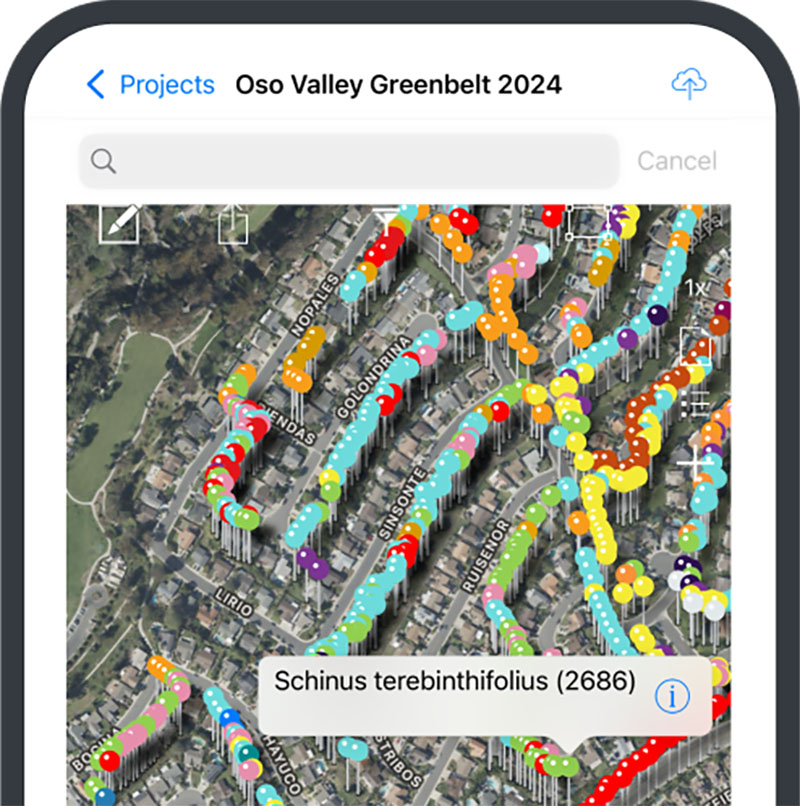
While A300-based standards are meant to be straightforward, their effectiveness often depends on how they are integrated into estimating tools and workflows.
Some tree care software platforms now embed the structure of A300 standards into their systems, enabling dropdowns and templates that guide estimators through setting out appropriate language for objectives, methods, and measurements.
“The specifications have become much more layman-friendly,” said Hank Ortiz, CEO and founder of leading arborist software company ArborNote. “They’re a lot more understandable to Mrs. Jones than they used to be.”
Still, Buell cautions that the standards aren’t prescriptive but instead meant to guide arborists in defining the specific language that works best for their operations.
“The standards were not made to just be plug-and-play,” he explained. “The language in the software often has to be built out by the company.”
The result is consistency and accuracy. When estimators, crews, and managers work from the same framework — and customers understand exactly what they’re paying for — benefits follow.
“You’ll have a more predictable business,” Buell said. “Customer satisfaction will increase. Profitability will increase.”

Raising the bar with better specifications
A300 standards continue to be underutilized in the industry despite the benefits they bring. Buell suggested that culture is one main reason for this.
“This is a very vocational field,” he said. “We’re kinesthetic learners. We’re out in the field. We like to be active. We want to do things, not talk about them.”
When tree care teams run into problems with customer expectations, it can be easier to fix the issue as a one-off than to step back and identify the root cause of the miscommunication. But failing to examine how language affects performance, the industry misses opportunities to improve professionalism and customer satisfaction.
“If we as an industry would be more accountable to raising the bar in this way, it could raise the tide around our culture dramatically,” Buell said.
Fundamentally, the A300 standards offer a simple but necessary resource: a shared language for the business of caring for trees. When arborists use that language to create clear, detailed specifications, they promote clarity, protect customers, enable crews, and elevate the profession.