Sage Advice
Robert Phillips on Training and Educating the Next Generation of Arborists


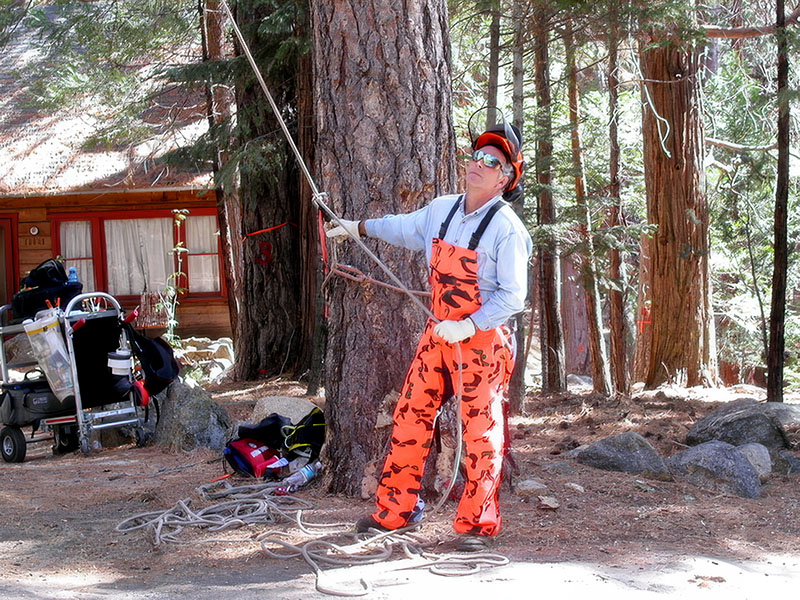

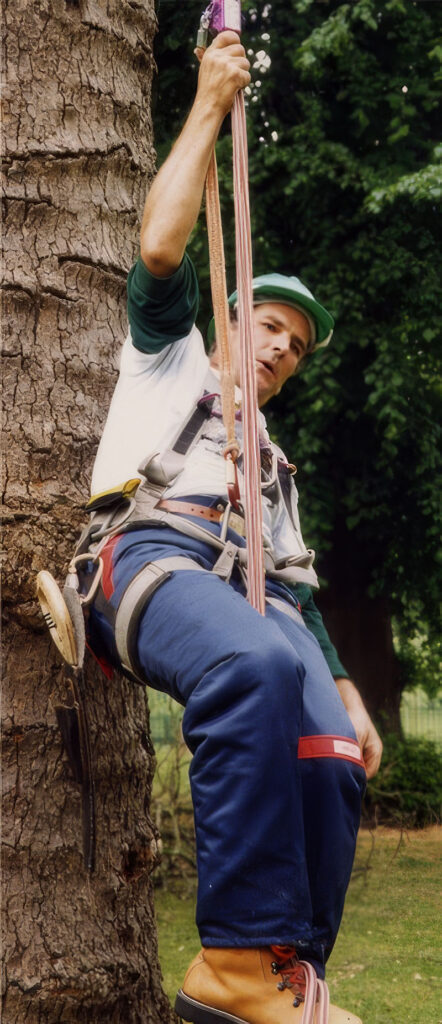
As a third-generation arborist, Robert Phillips has had an illustrious career both on the ground and in the canopy. For more than 50 years, Phillips has spent time climbing, competing and educating those in the industry. Throughout his illustrious career, he has used his talents with several tree care companies, such as Sohner Tree Service, Pacific Slope Tree Cooperative and most recently his own Santa Rosa-based company, TW Ranch Inc., (now subsequently shuttered). Today, he continues his work as an independent tree care provider, offering his expertise to those who rely on his deep knowledge and skill.
In this conversation, Robert reflects on his decades in the field and shares hard-earned insight for the current and next generations of industrial athletes that live among the leaves.
Q: How did growing up in a tree care family business influence your path into arboriculture?
A: It started in the ‘70s when I started competing in the Tree Trimmers Jamboree. And that inspired me because I was a competitive young man and exercised my skills in tree climbing … at a competitive level.
Q: What are some of the most important lessons you learned while working with Sohner Tree Service early in your career?
A: I should say, ‘safety first.’ Having had several accidents, I can speak from experience that sometimes an ounce of prevention is worth a ton of cure. And I had many mentors throughout my career and learned from each one of them. So, it’s always, ‘think safety.’ And of course, it’s important to get the job done, but not worth taking short cuts.
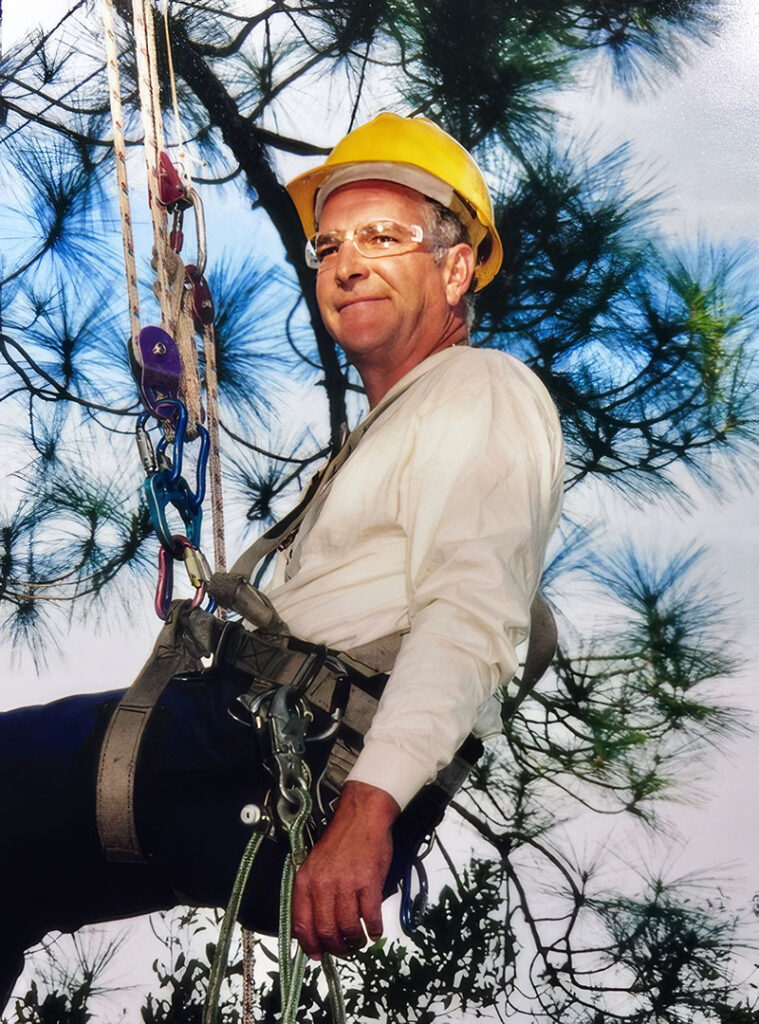
Q: In your experience, how have climbing techniques and equipment changed since you began?
A: They’ve changed dramatically. A good many new knot hitches have been introduced, and one of my specialties is working with a mechanical advantage, a means in which to move one’s weight with less effort up and in and around in trees. I had the opportunity to work with a tree care association as a head demonstrator for its event, and each year I wanted to introduce something different.
Q: What inspired you to shift from field work into training and education within the industry?
A: The opportunity knocked, and I answered the door. There were very few people at the time that were able to offer that avenue. I began to author many articles for magazines and newsletters, and as a result, I became more in demand. Otherwise, I don’t think my exposure would have gotten very far. So, accompanied with the actual demonstrations in the field, my articles highlighted much of what needed to be brought home to the worker and then shared with their co-workers.
Q: You have received multiple honors such as the ISA Award of Merit from the western chapter. What do these recognitions mean to you?
A: I just look at these achievements as though I’m being heard. People are responding to what I have to say and recognize that I’ve taken the challenge and met it head on and provided necessary information to back up what I believe.
It’s been a lifelong obsession [to work in this industry and give back]. I’ve served on our board; I’ve served in all positions. And the awards are just kind of what come along with the recognition of having served in the capacities that I’ve been asked to be a part of and I’m still a part of.

Q: Can you tell us about the static removable false crotch you developed and how it improved climbing practices?
A: That happened by chance and perseverance. It was a technique that [I] was trying to reduce the amount of effort needed to ascend up in a climbing system. [The question was] how to place a pulley up in a tree that didn’t move that allowed for you to gain a three- to-one mechanical advantage.
WI worked on this for many years until finally I realized how it could work. And honestly, it changed my life because I’ve demonstrated or showed other people that there was a way to ascend into a tree with less effort [and] less energy.
Q: What do you enjoy most about working as an independent tree care provider today?
A: Freedom. Being able to determine my time schedule and the allowance to be able to make accommodations, to not have to be structured necessarily. If I need to do something in the course of the day, I don’t feel like I’m on the clock. I was on the clock for years, and I’ve never really had that freedom.
Q: How important is it for experienced professionals to share their knowledge with newcomers to the industry?
A: [I] can’t say enough about it. Each year, I look for the opportunity to share my knowledge either at the annual conference or at regional meetings. And I’m constantly being asked to … share my knowledge, so I still continue to write for the chapter newsletter. Some things are inspired by just working in the field and others are when people ask me questions and I don’t have the answer, so then I’m inspired to seek the answer.
Q: After 50-plus years in tree care, what advice would you give to someone just starting their career in this industry?
A: Don’t think you know it all. Be willing to learn and accept the knowledge that’s being given to you and seek knowledge when you don’t have the answer.