When the Woodlot Goes Quiet
Taking Down Scale-Killed Red Pines in a Small Lakeside Woodlot


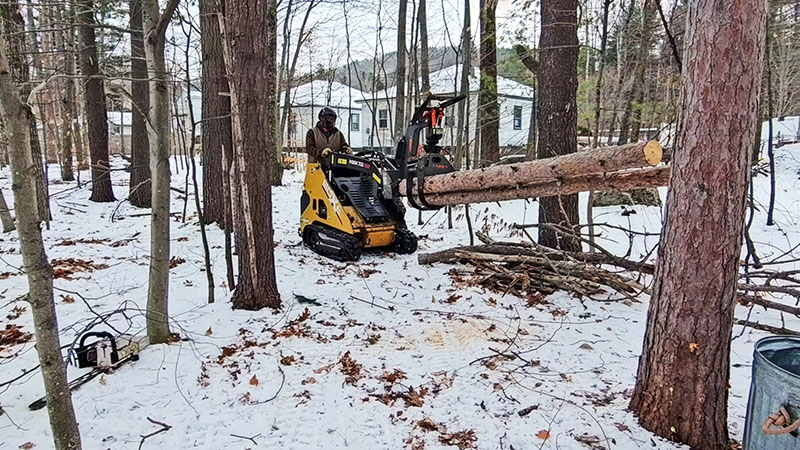
Red pine scale (Matsucoccus resinosae) has emerged as a rapidly expanding pest of mature red pine stands across the northeastern United States. Feeding beneath the bark plates of trunks and large branches, this invasive insect uses its piercing–sucking mouthparts to draw sap from the phloem, disrupting carbohydrate transport. As the scale feeds, resin production declines, weakening the tree’s first line of defense against secondary colonizers.
The earliest visible symptom is often a shift in crown color from healthy green to an olive drab. The canopy then progresses to reddish brown and finally the dull gray of a dead tree — all of which can occur within a single growing season. White, waxy scale deposits may be present beneath bark plates or exposed in the excavation holes left by woodpeckers targeting secondary pests. By the time these signs are visible from the ground, the tree is almost always beyond saving.
This was the scene that greeted a crew from Girard Tree Service when they arrived at a two-acre lakeside woodlot in Alton, New Hampshire, during the winter following the 2025 growing season.
The Warning Signs Were There
The property owner first noticed browning needles in midsummer of 2023 — a season marked by excessive rain and widespread foliar disease throughout the region. But by winter, several red pines in the stand had turned completely brown. A closer inspection confirmed the cause.
What appeared at first to be foliage decline instead revealed white waxy residue beneath bark plates, heavy woodpecker activity, and the small exit holes of bark beetles. Taken together, the symptoms pointed unmistakably to red pine scale. The dead trees were clustered tightly within the woodlot, a pattern consistent with the pest’s dispersal via wind and birds. Most of these pines measured between 20 and 24 inches in diameter and were estimated at 60 to 70 years old — mature trees with little to no chance of recovery.
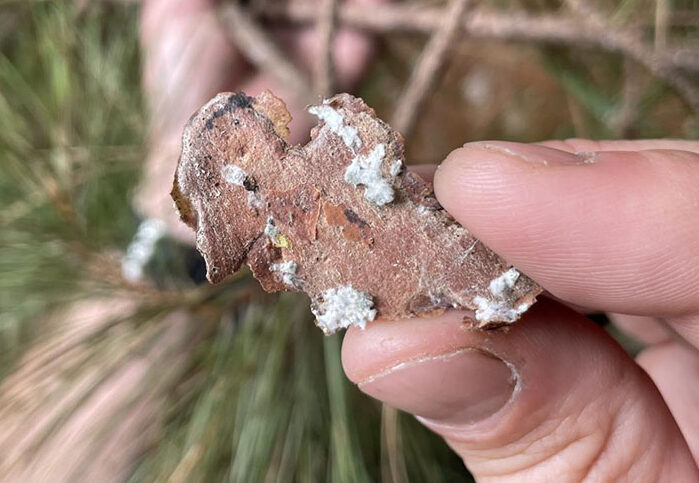
Addressing the problem would not be straightforward. The operation required careful reading of the stand, meticulous planning, and an adaptive rigging strategy. Every decision on this site demanded restraint.
Recon of the Red Pines
Before starting any removals, the crew performed a detailed site assessment. The woodlot supported a healthy understory of sugar maples and oaks that the property owner was determined to preserve.
Each dead or dying pine was evaluated for lean, fall potential, and proximity to targets both natural and structural. From there, the crew mapped drop zones and tested the structural soundness of every potential rigging anchor through mallet sounding and close visual inspection.
Red pines, unlike ash trees, behave unpredictably when compromised. Whereas emerald ash borer–damaged ash tends to become brittle and consistently fracturable, red pines suffering from scale experience early and extensive sapwood decay. This loss of structural strength begins long before visible signs appear, making the wood deceptively unreliable. For arborists, that means treating every anchor — even one that appears sound — as suspicious until proven otherwise.
Putting the Plan in Action
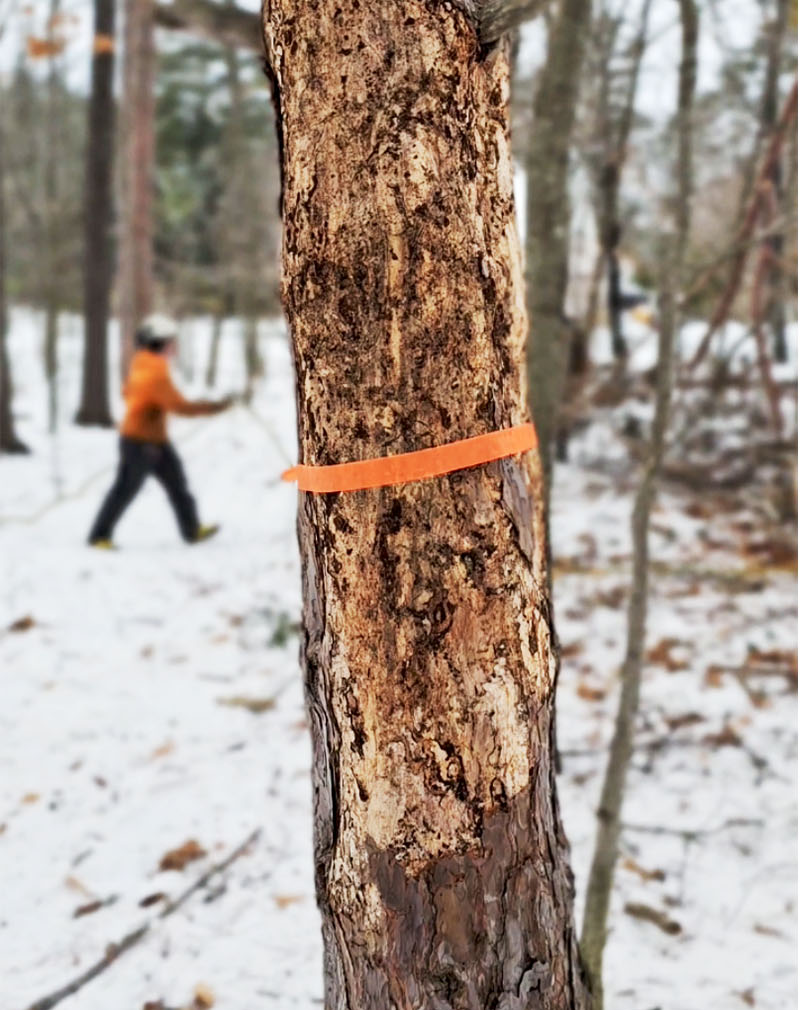
To protect the understory, the crew chose to rig every removal rather than fell any trees conventionally. But another challenge quickly became clear: climbers found that their spurs sank into the bark and outer wood with little resistance. Later, cross sections confirmed solid heartwood surrounded by significantly weakened sapwood — a hazardous combination that creates the illusion of stability.
A tree might pass a mallet test and show no external cracks yet still fail under rigging loads. With that in mind, the crew adopted a conservative approach from the outset.
The first major decision was to select a primary rigging anchor. A large red pine at the edge of the infestation appeared structurally sound and passed both spur testing and detailed inspection. It became the main anchor for the first phase of work. The crew opted to use this single anchor as long as safely possible; every transition to a new rigging point would introduce unnecessary risk in a stand filled with compromised wood.
Two climbers ascended the affected trees adjacent to the anchor. Before any cuts were made, each rigging point was confirmed aloft, the landing zone was cleared and established, and both rigging lines and taglines were secured to lowering devices on separate trees. No piece was cut on assumption — only after rigging was set.
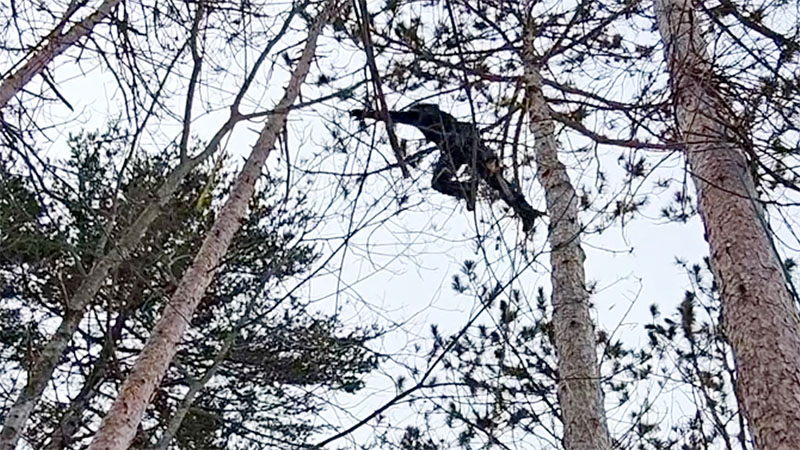
Tip ties (in which the butt of the limb will swing out when cut) and the reverse, butt ties, were used strategically to maintain full control of tops and large limbs. Butt ties offered better control of long pieces with heavy lower weight, while tip ties were more effective for shorter or top-heavy sections.
Variable-friction lowering devices operated aloft helped manage descent speed and minimize shock loading on already suspect wood. This control was especially critical, and piece sizes remained purposefully smaller than what the crew would typically cut in healthy timber.
Removals progressed from the outer edges of the cluster inward. Each dismantled tree created more space and improved working conditions. By the time the crew reached the most interior and most compromised stems, they had a well-established landing zone and better information about remaining rigging options.
Climbing Into the Worst of It
Several trees deeper in the stand posed a more complex challenge. They were too distant from the primary anchor for safe rigging, and the surrounding understory trees lacked the size to serve as rigging supports. These interior trees were also the most decayed.
Climbing them required additional precautions. Before either climber ascended, the crew installed load binder straps at regular intervals along the trunks. These straps helped stabilize each stem against splitting under load and would contain wood if a section failed unexpectedly. Strap spacing varied based on tactile and visual assessment of the sapwood at each level.
Working from the top down, the climber removed very short sections. After every cut, they examined the exposed wood face for fiber strength, color, texture, and moisture — each a potential indicator of how cautiously the next cut needed to be made. If the sapwood appeared soft or discolored, the next piece was cut smaller than originally planned.
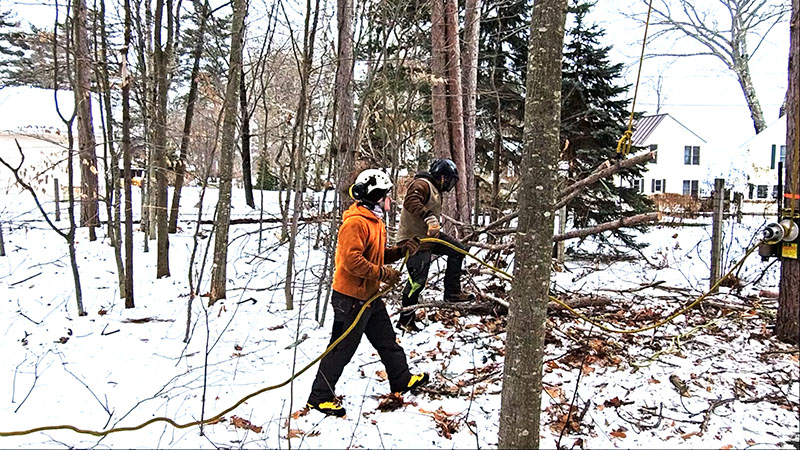
All of these decisions were grounded in a conversation held during the pre-job safety briefing: slower work was preferable to unnecessary risk, conservative sectioning was the rule, and a small amount of understory disturbance was acceptable if it prevented a more serious failure aloft.
Once a given stem had been lowered below the canopy of surrounding trees, the final felling caused minimal damage to the understory.
Finishing the Job
All debris was removed from the site during the dormant season and processed through an industrial grinder. Timing mattered. Logs left onsite into the spring can harbor overwintering scale, allowing crawlers to emerge and reinfest surrounding trees. Prompt off-site processing aligns with current extension recommendations and should be included in any contract for removals in scale-affected stands.
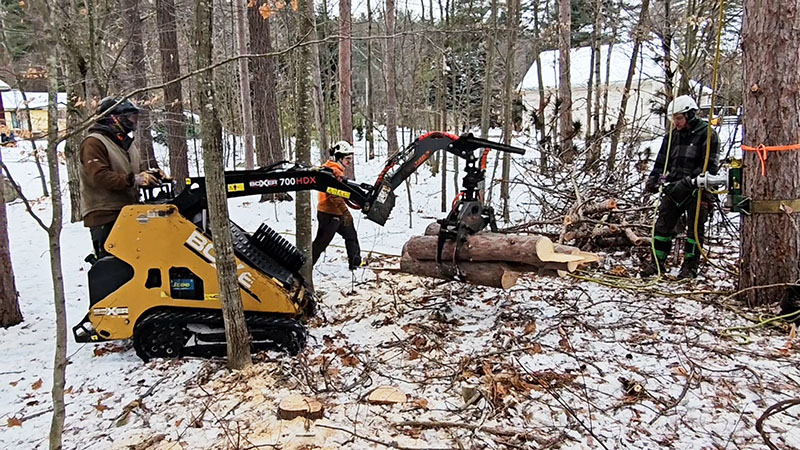
Today, the Alton woodlot is quieter. The red pines are gone, and the remaining maples and oaks now receive more light and resources. The crew completed the project without significant understory damage, but the outcome required slow, deliberate, and highly adaptive decision making. The gap between what the job looked like at first glance and what it ultimately demanded is instructive for arborists who may soon face similar removals.
Red pine scale is no longer a localized issue. It is moving north, and removals of scale-killed red pines will become increasingly common across New England. These jobs require accepting that wood that looks solid may not be, that rigging anchors cannot be trusted until proven, and that piece sizes must be smaller than instinct might suggest. Knowing this before you arrive is half the work. The other half is letting the site set the pace.