Learning the Ropes
A Bird’s Eye View on Climbing Systems in Arboriculture


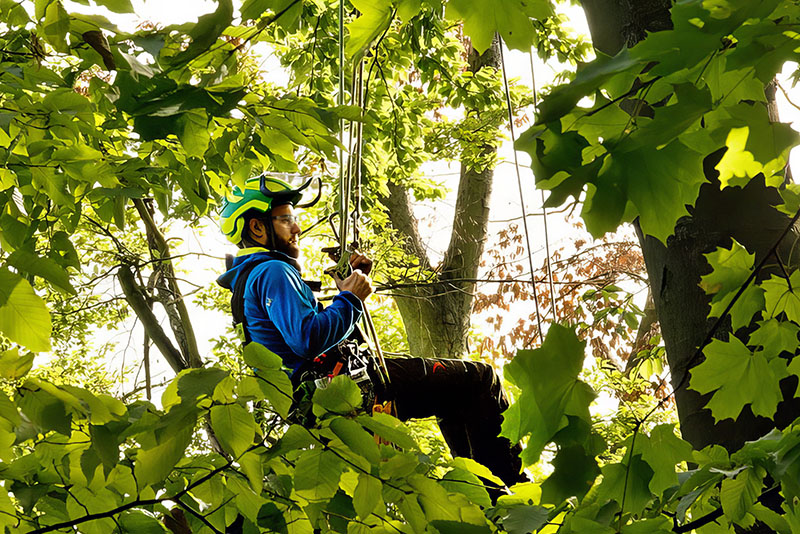
There has been an incredible evolution of climbing systems in arboriculture over the last few decades.
From a discipline that was once dominated by traditional ropes and knots now offers a wide variety of advanced gear, hitches, and techniques. Among these, friction, mechanical, and hybrid climbing systems set the standard for how arborists climb, move, and work in trees.
Every climbing system has a unique rhythm and style, and while most professional climbers can master multiple techniques, the choice between them is rarely arbitrary.
Tied and True: Friction Hitches
Friction-based climbing systems still form a fundamental part of arboriculture today — and for good reason. This type of system incorporates and relies on standard climbing knowledge that is necessary for any ascending arborist. Often a building block for other systems, friction-based climbing is favored for its simplicity and practicality.
When routes planned from the ground don’t pan out in the canopy, versatility is a climber’s best friend. Friction hitches can be tied in a number of configurations and adapted to a wide range of climbing systems, particularly if something goes awry.
“If a mechanical hitch begins slipping during a climb, there isn’t much you can do to address this,” Mason Hanrahan, owner & president of Tim-O-Tree, shared. “But if a friction hitch begins slipping, you can retie with an additional wrap or a different knot.”
The go-to friction hitch will vary from climber to climber, but for Hanrahan, his favorite is the Catalyst.
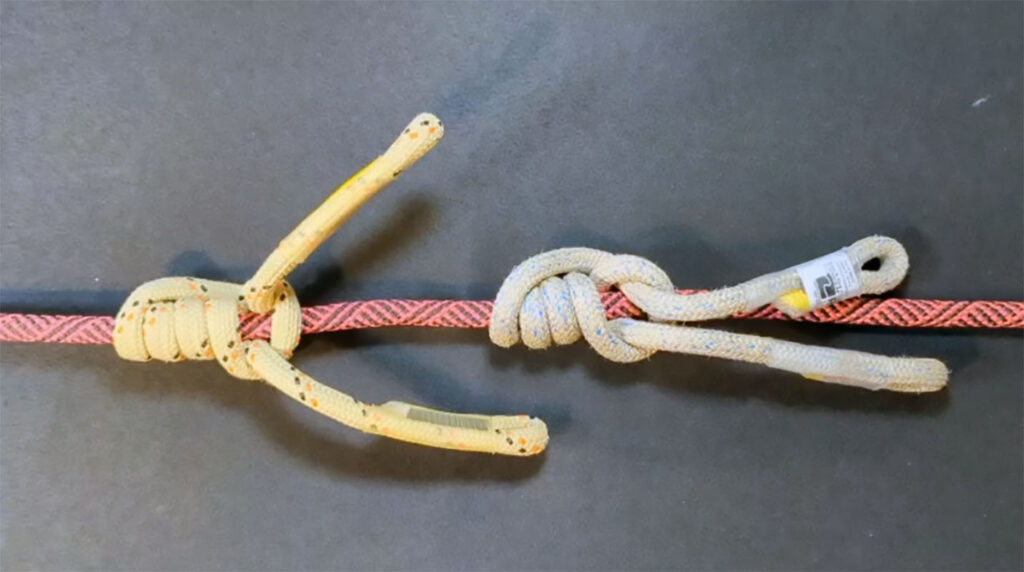
“It works very well with a triple attachment pulley because the bottom of the hitch is both broad and symmetrical, meaning it can’t get pinched between the plates of the pulley,” he explained.
Along with its versatility, friction-based climbing is especially friendly for beginners. With fewer parts to worry about, these systems are relatively simple to inspect, maintain, and troubleshoot.
(Not to mention, there’s less of a need for expensive friction devices and other hard gear that may be out of budget for new climbers.)
In fact, when working with just hitches, the climber gains a tactile understanding of how the system behaves and can better adjust their strategy and route. This is especially important for limb-walking and performing precision work.
As fundamental as friction-based climbing is, these systems also have their drawbacks. Their performance can vary with rope construction, humidity, glazing, accumulated wear, and how precisely a hitch is tied — meaning hitches and techniques that work well one day might not be as dependable the next.
Another consideration is that these systems require more physical effort which may lead to fatigue, particularly during long ascents or when frequent repositioning is required. Add summer heat to the mix and fatigue may come even sooner, making the job much harder to complete safely and swiftly.
What’s most important to remember about friction-based climbing is its reliance on solid, foundational knowledge on knots, hitches, and rope performance. Before ascending, climbers need to be able to trust their tying skills and know that their hitches can hold their weight and get them back to the ground safely.
MRS/DRT/DdRT
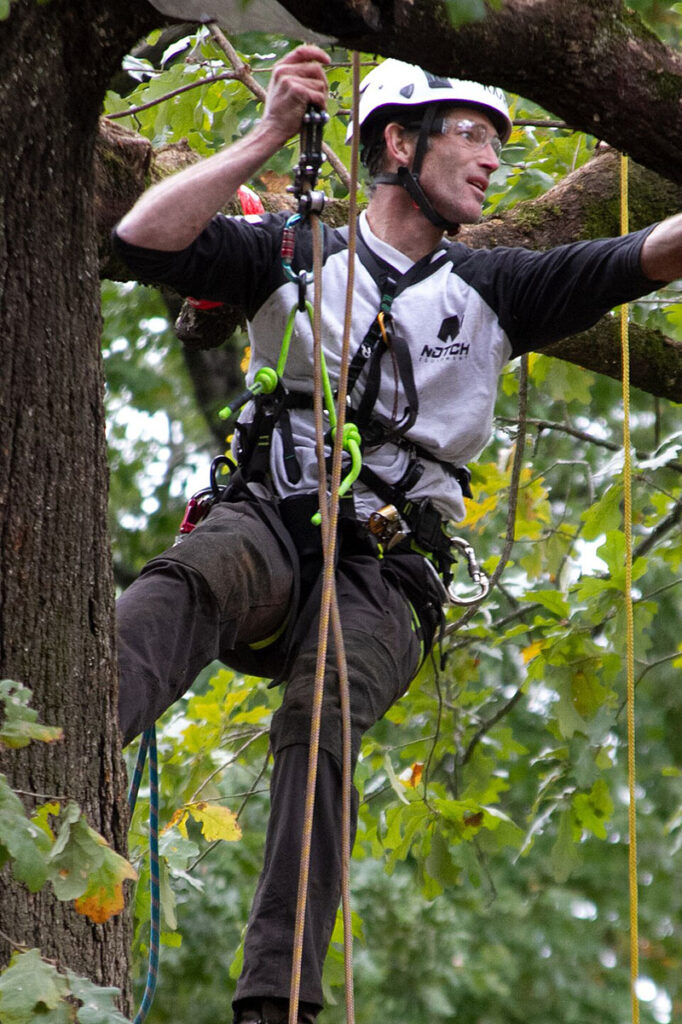
For many tree climbers, MRS — formerly double rope technique (DRT) or doubled rope technique (DdRT) — is arguably the most intuitive and easily learned rope system. The defining feature of MRS is that the rope “moves” with the climber, providing a natural rhythm for controlled movement. Perhaps the greatest benefit of MRS is how climbers exert roughly half their body weight when climbing a tree, which makes advancing the rope and repositioning easier.
“If the job requires a lot of limb-walking but no redirects, I will prefer MRS because of the 2:1 mechanical advantage,” Hanrahan noted.
Relocating tie-in points is another key advantage of MRS, especially when climbers need to change position frequently.
“If the job requires me to relocate my tie-in point, MRS is better because it is just about impossible to relocate an SRS tie-in point while aloft,” he added.
However, MRS is not without its disadvantages. Jamie Chambrelli, regional safety manager at SavATree, explained how the mechanical advantage of MRS can lead to greater exertion and fatigue for the climber.
“MRS requires twice the amount of rope to be moved per foot, so ascending can be a much more physical and repetitive task,” he said.
Friction is another disadvantage of MRS. Multiple friction points in the canopy increases resistance, making the system harder to use with more complex work.
“While climbing in MRS, the climber must stay aware and carefully plan out canopy movements,” Chambrelli instructed. “Going under, around limbs, and redirecting will increase the overall friction in the moving system.”
For large operations, these drawbacks can spell a very slow and exhausting process unless a more efficient system is used.
“For removals, I almost always use SRS as it is easy to set up a choking lifeline from the ground and lanyard-flip my way up the tree,” Hanrahan shared.
SRS/SRT
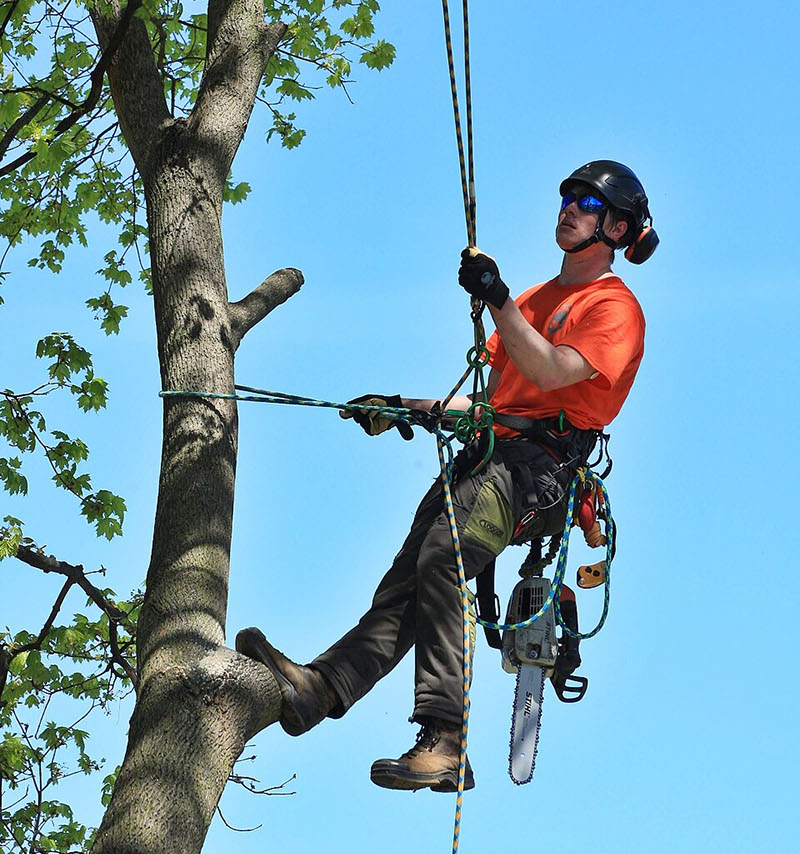
SRS — formerly single rope technique (SRT) — has become popular over the last several years. With SRS, the rope is stationary, and the climber moves along the rope. This setup offers incredible efficiency when climbing high because the climber can move in a strong and upright position, especially with foot ascenders, knee ascenders, and other climbing devices in tow.
SRS also offers minimal friction, even when there are multiple redirects in large trees.
“If the job requires a lot of redirects, SRS is the best choice as it is easy to install retrievable redirects where additional friction won’t interfere with my climbing efficiency,” Hanrahan assured.
Tim Spence, business owner at Arborist Halifax emphasized the practical advantages he has found in his preference for SRS/SRT climbing systems.
“I prefer SRS primarily because it allows for far more efficient movement when ascending trees,” he said. “The energy savings with an SRS rope-walking configuration are significant compared to MRS.”
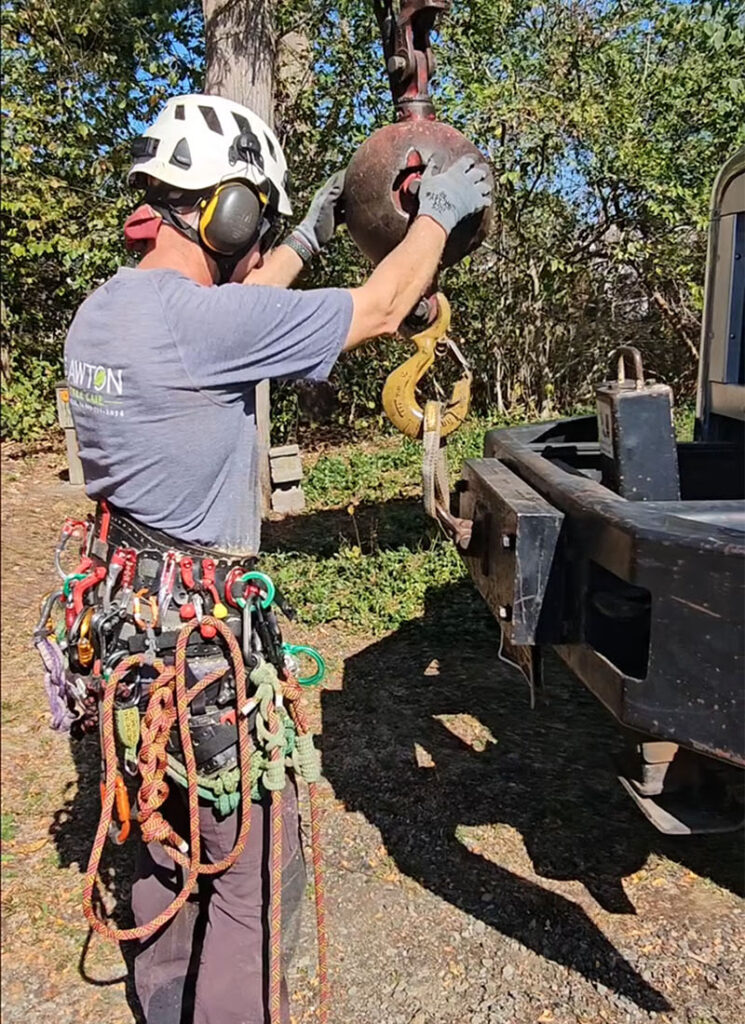
But even with energy savings, arborists can feel weighed down by an SRS system.
“The climber must advance all of their body weight in an SRS system,” Chambrelli explained. “This means the climber cannot just pull down on the rope and move up — it requires a mechanical ascender or excellent foot locking technique to be efficient.”
Additionally, the weight applied by a climber is directed to the anchor point, so proper selection of an anchor point or use of a canopy choke is important. A poorly selected anchor point may lead to failure, especially with dynamic movements or devices that can exert higher loads.
Proper understanding of SRS concepts should also be fully grasped. Since SRS is more complex and less intuitive than MRS, this may affect climbers who are accustomed to MRS’ simplicity.
“SRS is more gear-intensive,” Chambrelli confirmed.
When deciding between MRS or SRS, it should be based on the nature of the work at hand.
“I decide what is most efficient and comfortable while in the tree, generally opting for MRS for lateral canopy movement or SRS when the work requires a dedicated ascent to a specific work zone,” Spence concluded.
Modern Marvels
While friction-based systems have been the traditional choice for many years due to their natural feel and simplicity, the integration of mechanical devices in arboriculture has gained popularity in recent years. Climbing devices such as the Notch Rope Wrench and Rope Runner Pro, as well as the Petzl ZigZag and the Pantin Click Ascender can dramatically improve efficiency and reduce fatigue.
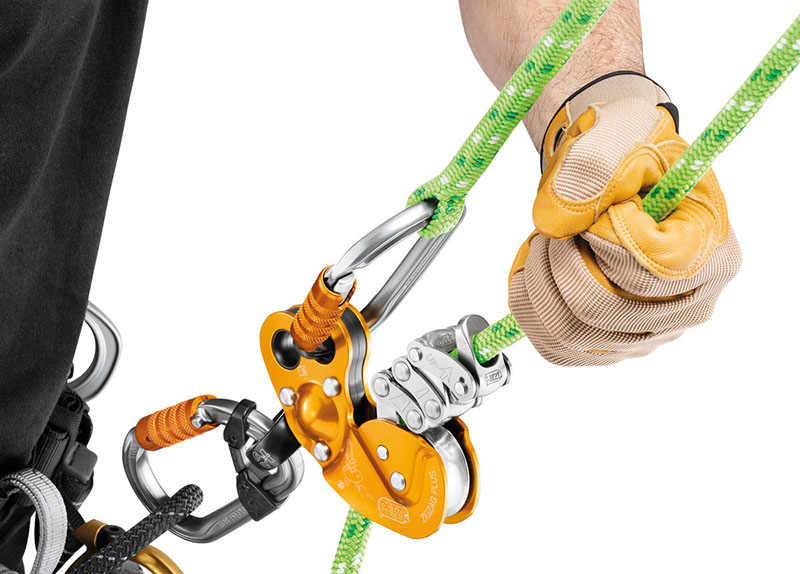
Levi Williams, ISA certified arborist at Tree Scouts Tree Service, shared his insights on how these devices create a segue from traditional friction hitches to mechanical ones.
“A mechanical Prusik device such as the ZigZag was made to replace traditional hitches such as the Blake’s hitch,” he recalled. “This system is used with DRT, usually. It’s a very reliable system that helps with rope slack management and precise device lock movements.”
Another advantage of mechanical devices is ergonomics. Many devices have been designed to be used with one hand, which allows climbers to achieve better balance and control. Mechanical devices also do a lot of the heavy lifting, which can make an incredible difference for climbers who spend long periods of time in the canopy. Not to mention, aluminum alloys, stainless steel, and machined components are all able to withstand heavy use required for career arborists.
However, mechanical devices are not without limitations and there is a cautionary tale to keep in mind when using them frequently.
“I strongly prefer hitch cords over mechanical hitches, primarily for safety reasons,” Hanrahan shared. “There have been several incidents of arborists using these devices going into sudden free fall, usually because they are dragging tail. […] The tail could wind up tangled in branches in the drop zone, or snag on part of the tree unexpectedly. A groundie may also pull down on the tail without warning.”
Mechanical hitches also require extensive training to be used effectively in conjunction with other techniques. Misuse or reliance on these devices can result in poor performance and unsafe working conditions.
“Tree work is extremely complex and many factors are beyond anyone’s control, so being able to adapt to changing conditions is essential,” Hanrahan continued. “If you are only capable of climbing with a mechanical device, you won’t be able to adapt to the situation if your device can no longer be used.”
Best of Both Worlds
Experienced climbers rarely rely on a single technique. In fact, many arborists learn to use hybrid climbing systems that combine MRS with SRS or mechanical devices with friction-based systems. This combination allows climbers to capitalize on the strengths of each system and ensures they have a backup plan at the ready.
“I don’t have a strong preference for [MRS or SRS], generally,” Hanrahan reflected. “Each has its advantages and disadvantages in different situations, so I allow the situation to dictate which technique I use. I may plan to use MRS when I start throwing into a tree but wind up with a decent tie-in point that I can’t isolate. In this case, it is far more efficient to use SRS with a base tie than it is to pull the line out and continue throwing.”
Nonetheless, some arborists prefer one configuration over another due to a sense of familiarity, muscle memory, and experience associated with a particular climbing setup.
“I use the Petzl ZigZag with the Chicane, along with a CT foot ascender and knee ascender for rope-walking,” Spence shared. “The ZigZag was the first mechanical device I learned on, and I’ve never felt compelled to move on — it’s comfortable and reliable.”
For someone new to the field, however, the choice between climbing systems and gear can seem overwhelming. For new climbers, having a system that focuses on the fundamental principles of tree climbing is key.
“I would suggest beginning on MRS,” Spence advised. “It’s more intuitive and easier to learn. Learning SRS with all the different mechanical systems, configurations, and compatibility considerations can be overwhelming to a newcomer. Once you’ve got MRS dialled in and you’re moving comfortably in the canopy, you’ll have the foundational skills to start experimenting with SRS.”
Hanrahan provided another caveat for new climbers about starting out on mechanical devices.
“I strongly caution new climbers from learning on mechanical hitches,” he asserted. “Beyond the safety concerns, I have seen it stunt climbers’ development and make them less capable of adapting to surprises on the job, as they typically don’t learn other techniques.”
Regardless of one’s preferences, it goes without saying that climbing gear, ropes, harnesses, and friction devices should be of top quality, as these are, in effect, life support devices that keep you climbing high.

Reaching the Top
The evolution of climbing technology has expanded the arborist’s toolkit in extraordinary ways, with emerging trends greatly increasing the reach of climbing activities.
“Innovation in this space is accelerating right now,” Spence shared. “New mechanical devices like the Art Blackbird, Buckingham Throttle, and ISC Reflex are addressing limitations of previous-generation devices. Specifically, they’re engineered to function on both SRS and MRS, solve mid-line attachability, and eliminate the need for additional friction tethers. I expect this trend to continue with devices becoming more hybrid-compatible, thereby reducing the need to carry multiple setups.”
Choosing a climbing system is a blend of one’s preferences, climbing experience, tree structure, safety practices, and the nature of the work at hand. The best arborists are those who understand the advantages and disadvantages of each system and can adapt their climbing style as needed.
“The climber should always use what they are going to be the most comfortable and productive with,” Chambrelli advised. “Learn all the systems of the trade and use the right system for the situation you are faced with.”
Ultimately, mastering your climbing technique is one of the best ways to equip yourself with the tools to climb the ladder, or rather the tree, of success.
About the Author
TJ Yurko is an ISA Certified Arborist® (PR-5403A), ISA TRAQ Arborist, and Certified Landscape Horticulturist Technician at his company, Tree J Consulting, where he advises clients on urban forestry and arboriculture best management practices and strategies for tree care operations.