Hot Days, Stressed Trees
Supporting Heat- and Drought-Stressed Trees Through Fall and Winter


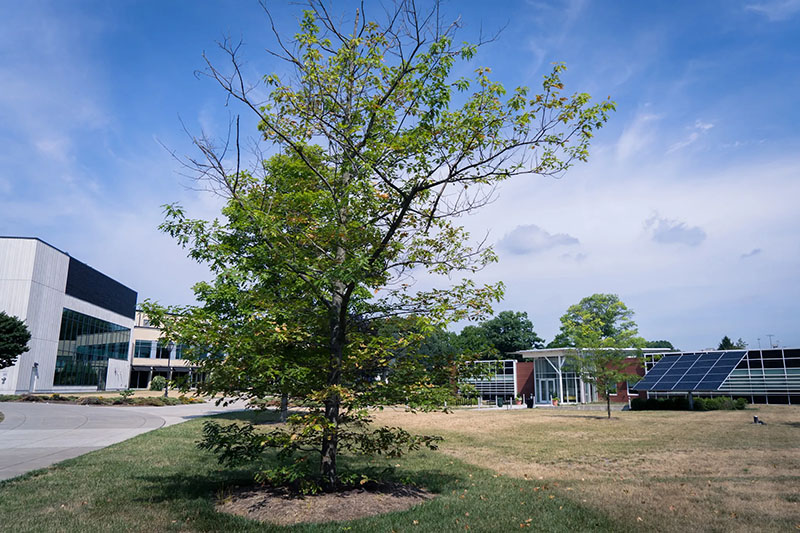
Summer’s long, hot and humid days can take a toll on tree health. And according to the latest data, those summer conditions are becoming more intense.
Summer 2026 had the highest average temperatures on record, according to the National Centers for Environmental Information, and the season appears to be staying warmer for longer each year. August 2026 was also the hottest on record, with daytime highs reaching an average of 88.6°F.
For trees, that means prolonged exposure to high temperatures and the potential for heat stress. While some species are more tolerant of extreme heat than others, prolonged exposure to blazing sun can damage even the hardiest trees.
The effects of that stress do not necessarily disappear when temperatures begin to cool. As summer gives way to fall and eventually winter, trees shift into recovery mode. Caring for them during this transition is a balance of providing the support they need while also allowing them to respond to the damage on their own.
Understanding How Heat and Drought Stress Happen
Heat stress and drought stress may sound similar, and in many ways, the two are interconnected. However, understanding the distinction between them can help arborists identify what a tree is experiencing and how best to respond.
Matthew Borden, doctor of plant medicine (DPM) and plant scientist specializing in research communications at Bartlett Tree Experts, said warm temperatures themselves can play a significant role in damaging a tree.
“It is the heat itself that’s breaking down processes and the plant’s physiology.”
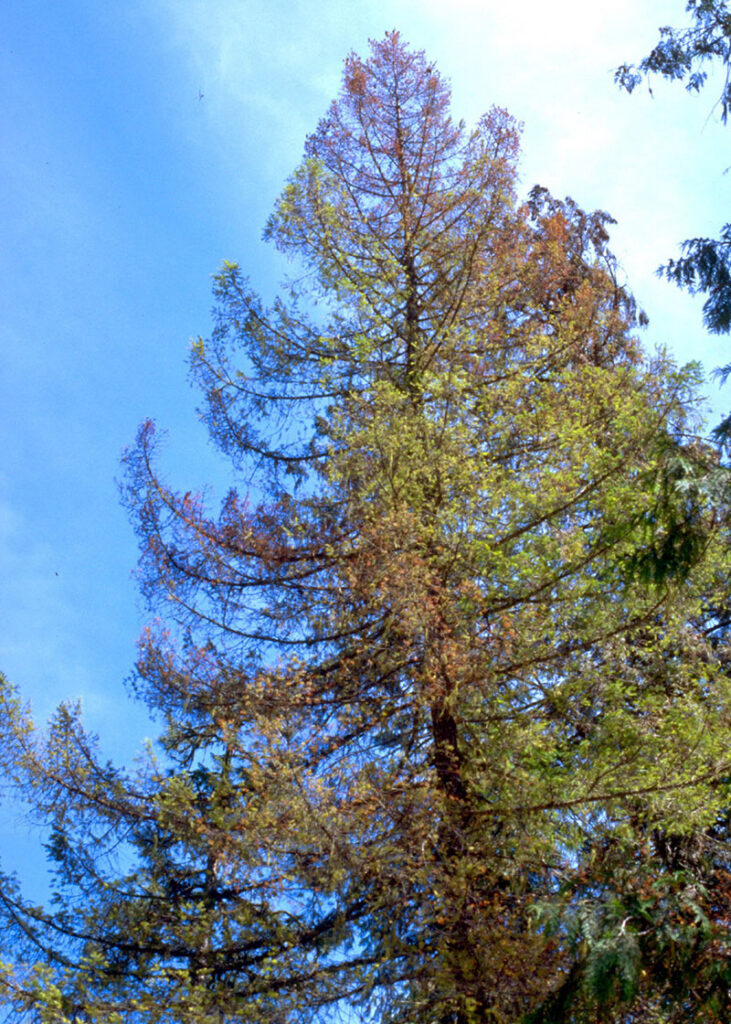
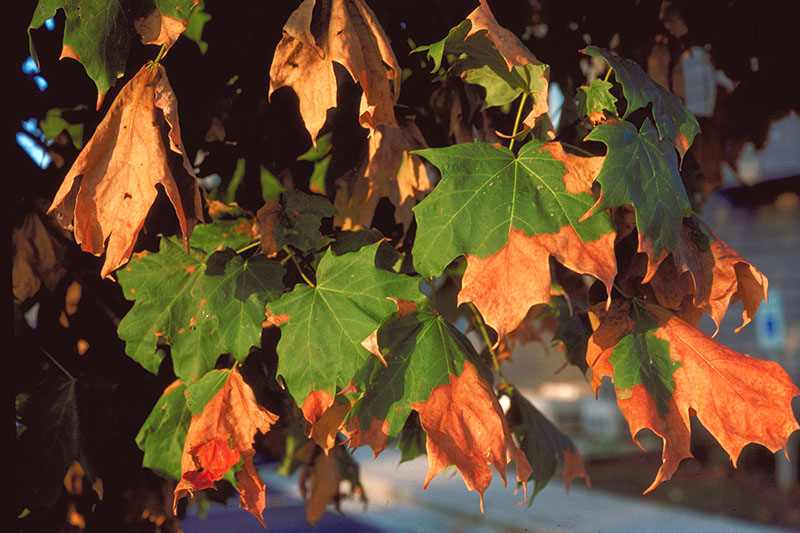
Those effects often begin where the tree is most directly exposed to the heat. Signs of heat stress typically appear in the outermost portions of the canopy.
“On the average broadleaf tree, starting mid to late summer you’ll see parts of the leaf that face the afternoon sun turn yellowish.”
While heat stress and drought stress are often discussed together, they are not interchangeable. There is an assumption that a plant that can tolerate less water will also be able to withstand heat well.
According to Borden, that is not always the case.
At the same time, the two types of stress can compound one another. Aaron Dickinson, president and master arborist at Arborcology Consulting, said heat stress and drought stress often go hand-in-hand.
“The heat stress itself leads to drought stress,” he stated.
When trees are exposed to extreme temperatures, Dickinson explained, they move water in an effort to support themselves during periods of intense heat. That process can ultimately leave the tree dehydrated, much like what happens to a person exposed to excessive heat.
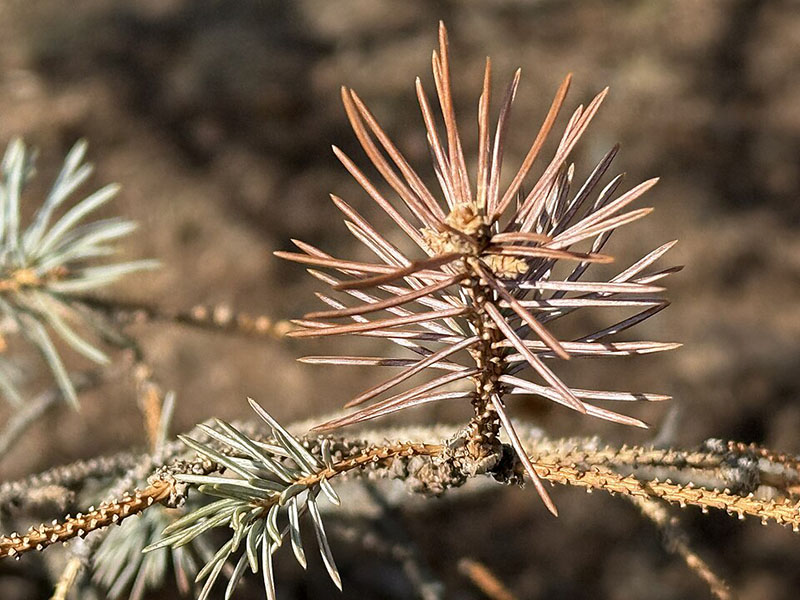
The resulting symptoms are not always easy to recognize. According to Kendra Wagner, research scientist and research and development manager at Rainbow Ecoscience, drought- and heat-stressed trees can be difficult to identify because their foliage may simply appear wilted, drooping or discolored. She likened it to romaine lettuce forgotten in the refrigerator: The leaves wilt, droop, and gradually lose their color.
When a tree is under heat stress, its leaves cannot retain as much water. As the cells lose water, they become soft and eventually collapse, creating some of the visible symptoms associated with heat and drought stress.

Vulnerability Caused by Heat
Those visible symptoms are only part of the problem. Heat stress can weaken a tree internally, leaving it less capable of defending itself against other environmental pressures.
“We see a decreased ability of the plant to defend itself,” Wagner said.
That reduced defense can make heat-stressed trees more vulnerable to disease and insect activity. Canker pathogens, in particular, can become more problematic on trees that have experienced heat stress, and the resulting damage may not be immediately apparent.
In the Northeast, Kevin Brewer, northeast territory technical manager at Arborjet, said rising temperatures are also contributing to humidity-related problems. Seasonal drought combined with higher humidity creates conditions that can leave more trees vulnerable to pathogens and insects.
“A good symptom of climate-caused stress is when you see native insects attacking native trees,” Brewer explained.
For arborists, these conditions create a difficult management problem. Properly timed fungicide applications can help address certain pathogen issues, but the larger challenge is determining how a changing climate should influence the way trees are selected, planted and managed from the start.
Before looking that far ahead, however, arborists must first help trees recover from the stress they have already experienced. That may mean resisting the urge to intervene too quickly.
Helping Sometimes Means Staying Hands-off
As temperatures cool and fall sets in, trees begin to recover and prepare for dormancy. It’s also a time when many people are tempted to address the visible damage left behind by a difficult summer.
But when it comes to heat-stressed trees, doing more is not always better.
“When you have that portion of the canopy that has suffered severe stress, humans have a tendency to want to jump in and help the tree right away,” Borden said. “We prefer to let the tree tell you where the damage occurred.”
Rather than immediately removing damaged material, Borden explained that it is often better to allow the tree time to reveal which portions of the canopy have actually been affected.
“If you prematurely take away that material, you might expose interiors to sun exposure,” Borden said, particularly for trees with horizontal branches, which can potentially cause further damage.
Waiting can be especially important because heat-related damage does not always reveal itself immediately. In some cases, the full extent of the damage may not become apparent until the following spring.
“When you see it next spring during the leaf out, you’ll see which branches were damaged.”
While patience can help arborists determine what damage actually needs to be addressed, there are other steps that can be taken in the meantime to help trees recover. One of the most important is maintaining adequate soil moisture well beyond the end of summer.
Watering Isn’t Just for Summer
Tree experts concur that continuing to water into fall and winter can be critical to helping heat-stressed trees recover. For Dickinson, it is a conversation he frequently has with clients because the end of summer does not necessarily mean a tree’s need for water has disappeared.
Evergreen trees, in particular, are prone to desiccation during fall and winter, Dickinson explained. After enduring a hot, dry summer, these trees can remain vulnerable as they transition into colder conditions.
For his own trees, Dickinson gives them an intensive soaking to help them manage the seasonal change.
“I go through with a soaker hose for four to five hours to well hydrate each tree going into fall,” he shared.
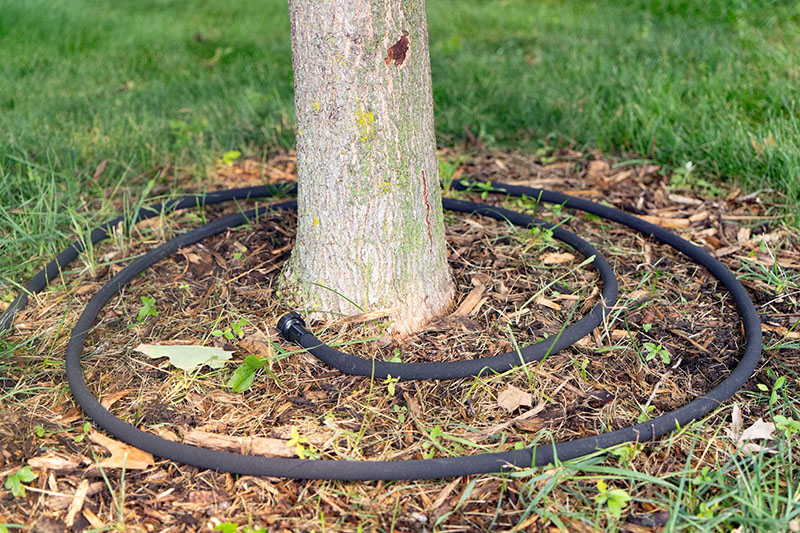
The method of watering matters, too. According to Wagner, homeowners often assume that short spurts of water from a hose are enough to replenish a tree’s water supply. In reality, that approach may only wet the uppermost portion of the soil.
Deep watering with a soaker hose or similar mechanism allows water to penetrate farther into the root zone and encourages roots to grow deeper. Without adequate deep watering, roots can remain shallow as they continue to seek out water near the soil’s surface.
“We want to reach approximately 12 to 18 inches in soil,” Wagner explained. “We want to encourage those root systems to reach further into the ground.”
Developing a dense root system can provide benefits beyond helping a tree access water: “If we can increase some of the fine root system, we can create root density,” he noted.
That focus on the root system also points to another important part of heat-stress recovery: maintaining the soil itself.
Minimize Fertilizers
As arborists consider ways to help a heat-stressed tree recover, fertilizer may seem like an obvious way to provide additional nutrients. But adding fertilizer is not always the best response, particularly as a tree approaches dormancy.
Borden advised limiting fertilizing during the fall and winter.
“It’ll add additional stress to the plant,” he stated. “You may force the plant to start producing new growth and then it’s going into winter.”
The timing of new growth is particularly important. Encouraging a tree to produce new tissue when it should be preparing for dormancy can create another source of stress rather than helping the tree recover.
There is also the issue of water availability. Many synthetic fertilizers contain salts, and applying them to an already dehydrated plant may contribute to additional water loss. When additional nutrients are necessary, arborists should consider a slow-release formula and apply it while the plant is dormant to minimize additional stress and water loss.
Rather than trying to push a heat-stressed tree into new growth, arborists can focus on creating the soil conditions that allow the tree to recover at its own pace.

Creating a Good Soil Environment
Unfortunately, arborists have limited control over daily temperature changes. They cannot change the heat and humidity surrounding a tree, but they can improve the conditions belowground to help trees better manage those environmental pressures.
That makes soil health an important part of the heat-stress equation.
“Heat stress does more than stress the trees; it also stresses the soil,” Brewer said.
According to Dickinson, soil should have around 5% organic matter. A biologically active soil environment can help trees make better use of available water and nutrients and support their natural recovery processes.
Organic mulch can play an important role in creating that environment. In addition to contributing organic matter as it breaks down, mulch can help the soil retain moisture and moderate soil temperatures — reducing some of the temperature fluctuations experienced by the tree’s root system. But how that mulch is applied matters.
“A three-foot mulch ring can make a huge difference with a tree,” Dickinson said.
Mulch donuts — not volcanoes — are the key. A wide, evenly distributed layer of mulch is more effective than piling material against the trunk. Brewer said mulch provides trees with a protective covering similar to what they would experience in a forest, where dead leaves and other organic matter naturally accumulate around them.
A healthy soil environment is not only about mulch, however. Creating a diverse plant environment around trees can also provide natural groundcover and support beneficial insect populations. Brewer said this kind of diversity can help plants better cope with the pressures associated with a warming climate.
Researchers are also exploring ways to improve the soil environment through products designed to support plant health. Rainbow Ecoscience is working on soil-applied products intended to create better conditions for trees.
“We’re doing a lot of research on what we call ‘inducing agents,’” she said.
‘Inducing agents’ are biostimulants that are designed to help plants make better use of the nutrients and other resources available to them. This may better prepare plants to deal with environmental challenges such as heat stress.
The emphasis on soil health reflects a broader shift in how arborists think about heat stress. Rather than waiting for extreme conditions to damage trees and then responding, tree care professionals are increasingly considering how planting and management decisions made years in advance can influence a tree’s ability to withstand those conditions.
As the climate continues to warm, it is altering how tree care professionals approach planting and long-term tree management.
“It adapts your ideas for what you want to plant for future trees,” Brewer explained. “We have to plant different species that are adapted to our conditions.”
That does not necessarily mean abandoning native plants in favor of non-native species. Instead, Brewer often travels south to observe what is thriving in warmer conditions because he anticipates that those same temperatures may eventually become more common in his region.
The idea is to look beyond the conditions a tree experiences today and consider the conditions it may face throughout its lifetime.

For Wagner, that kind of forward thinking also means changing the way the industry approaches drought and heat stress. Rather than treating heat-related problems only after they appear, arborists can incorporate drought and heat resilience into their planning and conversations with clients.
“Drought or drought stress is an afterthought in our industry,” she said.
Wagner believes arborists should be well educated on how to support heat-stressed trees and able to communicate management plans that help clients understand what their trees need – not only during periods of extreme weather but also before those conditions occur.
“By having educated and well-versed stewards of our trees, they’re able to carry these conversations with landowners more readily,” he explained.
That education becomes increasingly important as the effects of heat extend beyond a single summer. Heat stress can affect a tree’s immediate appearance, its ability to defend itself against insects and disease, and its capacity to recover from other environmental challenges. At the same time, the conditions surrounding the tree – from soil moisture and organic matter to species selection and planting decisions – can influence how well it withstands those pressures.
As temperatures continue to rise across the country, heat stress and its management will become an issue more arborists will have to address. The most effective response may not always be an immediate treatment. In many cases, it begins with understanding what the tree is experiencing, giving it time to respond, and creating the soil, root, and environmental conditions that allow it to withstand the next season of heat.