Stopping the Bleed
How to Handle Critical Injuries


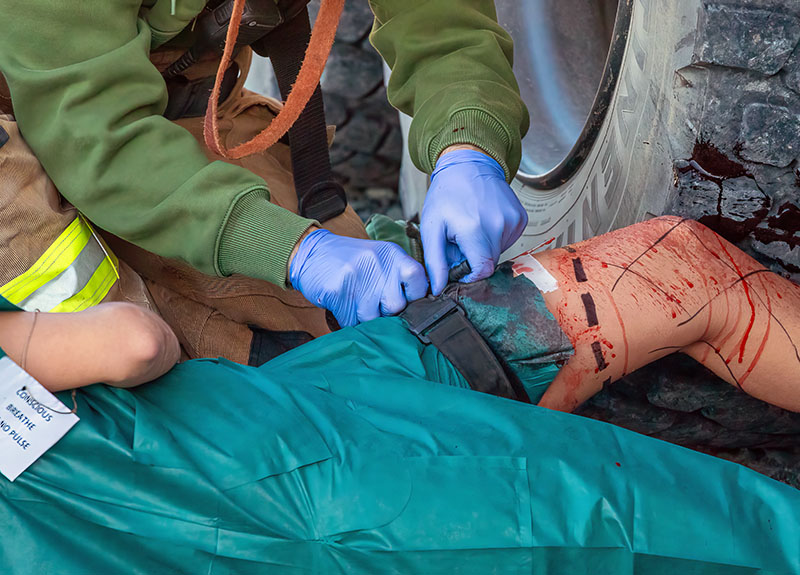
Chainsaws, chippers, climbing systems, falling limbs, rigging, sharp tools, roadside traffic, and remote worksites can turn a normal day into a major bleeding emergency in seconds, leaving only minutes if left uncontrolled. Knowing how to respond when the unthinkable happens can mean the difference between life and death.
While protocols can help prevent injuries from occurring in the first place, providing workers with the training and knowledge, as well as having resources on site to respond when a major bleed occurs, is critical. Here are the key components of stopping a severe bleed when it happens in the field.
When Routine Work Turns Life-Threatening
According to John James, public safety sales officer at North American Rescue, LLC, tree care workers face 11 times higher injury risk, with severe injuries needing fast trauma response; delayed emergency medical services (EMS) arrival can worsen the outcome.
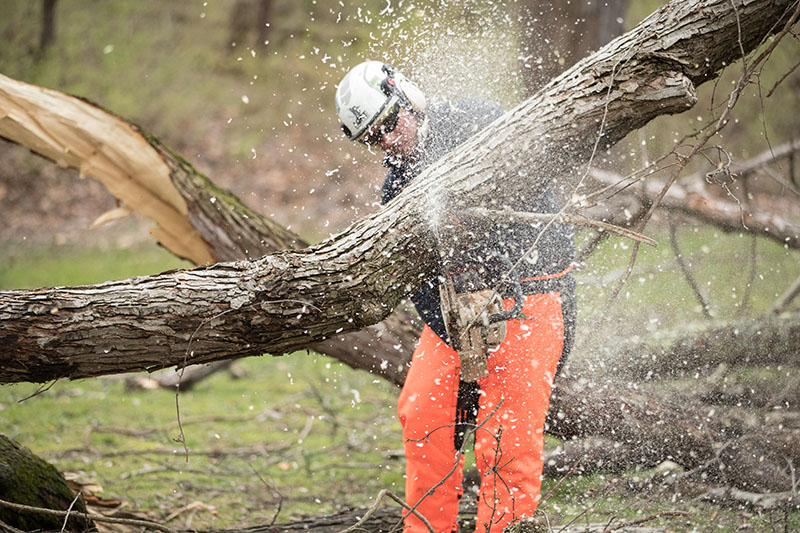
The main types of accidents common within the tree care industry are:
1. Caught in/Under: This includes chainsaw kickbacks, and woodchipper or stump grinder entrapments from catching victims’ limbs. In these situations, severe bleeding, traumatic amputations, and massive crush injuries can all occur.
2. Electrical contact: This can happen when working at heights near power lines or during storm damage cleanup around downed electrical lines.
3. Falls: When crews are working aloft — be it in a suburban neighborhood, a wooded park, or anywhere in between, there is always the potential for a crew member to fall.
4. Struck by: This category includes accidents caused by falling wood and branches that have the potential to create both external and internal trauma with bleeding.
Lisa Tadewaldt, tree care expert, and founder and owner of Girl Boss at Urban Forest Pro, agreed.
“Tree care can be very dangerous work. Even with experienced crews and strong safety practices, we work around chainsaws, chippers, heavy equipment, falling limbs, and heights every day. [T]hat means we need to be prepared for the possibility of a serious injury,” she said.
Big Bleeds Happen: What to Do
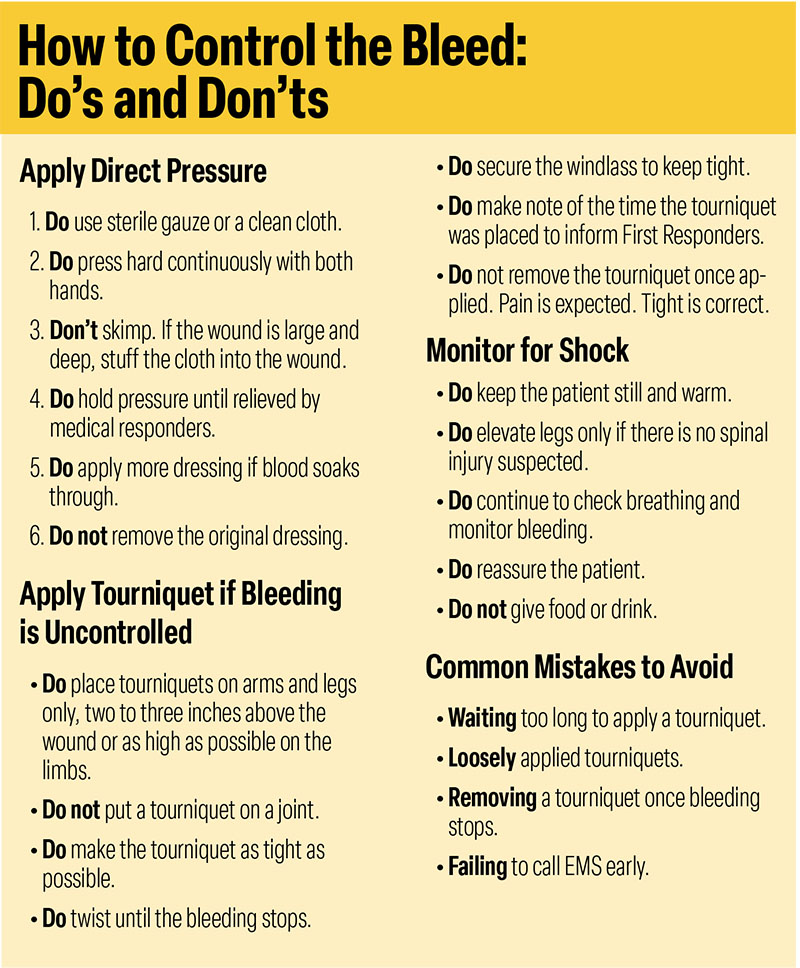
Although rare, when an accident occurs, colleagues and crew members need to be prepared and have a plan in place. This includes assessing the scene and the victim’s wounds, controlling the bleeding, determining whether the injury is grievous enough to need a tourniquet, and imparting necessary information to the EMS team when they arrive on scene.
How to Control Bleeding
Effective bleeding control follows a clear progression of techniques tailored to injury severity and location, according to Lonnie Johnson, director of marketing communications for North American Rescue.
To that end, there are three primary bleeding control methods:
- Direct pressure
- Wound packing
- Tourniquet
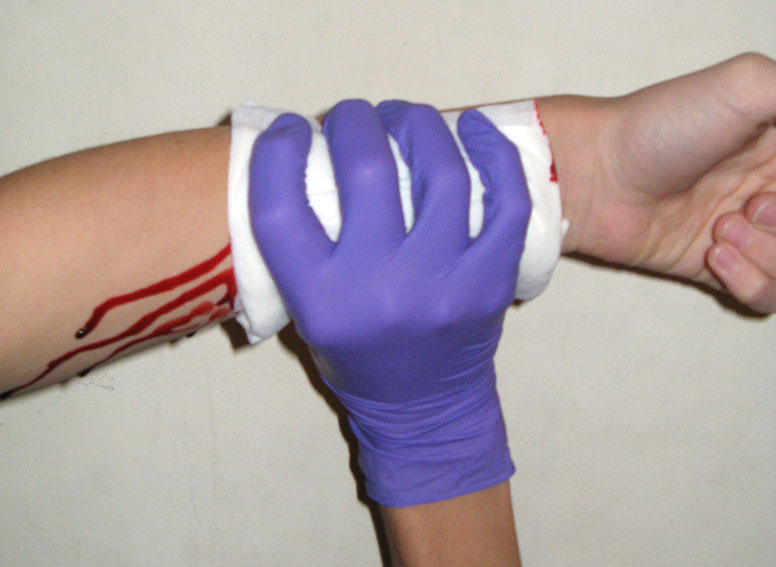
Direct pressure is the first aid for managing external bleeding, according to the American Red Cross. However, depending on your geographical location and how long it may take EMS to get on site, this can be difficult to maintain.
“Direct pressure is using an absorbent gauze pad over the surface of the wound and applying pressure to stop the bleeding. What we’re ultimately looking for is a clot to form with direct pressure,” Johnson said.
“For major bleeding, we use hemostatic dressings, such as a QuikClot bandage, combined with direct pressure,” Tadewaldt said. “We find these dressings versatile and relatively easy to use with limited training for many of the bleeding injuries that could occur on a tree-work job site,” she added.
Wound packing, on the other hand, involves filling the wound cavity with gauze before applying pressure and is suitable for compressible areas such as limbs and the neck base, according to Johnson.
For critical situations, a tourniquet – a medical device that wraps around the limb and stops blood flow – is often used immediately for life-threatening extremity bleeding. Warning signs that a tourniquet is necessary, according to Steve Reichenbach, owner and founder of Forest Safety Products (FSP), include rapid blood loss, blood pooling, continuous or spurting bleeding, dramatic amputation, or bleeding that cannot be controlled quickly from direct pressure.
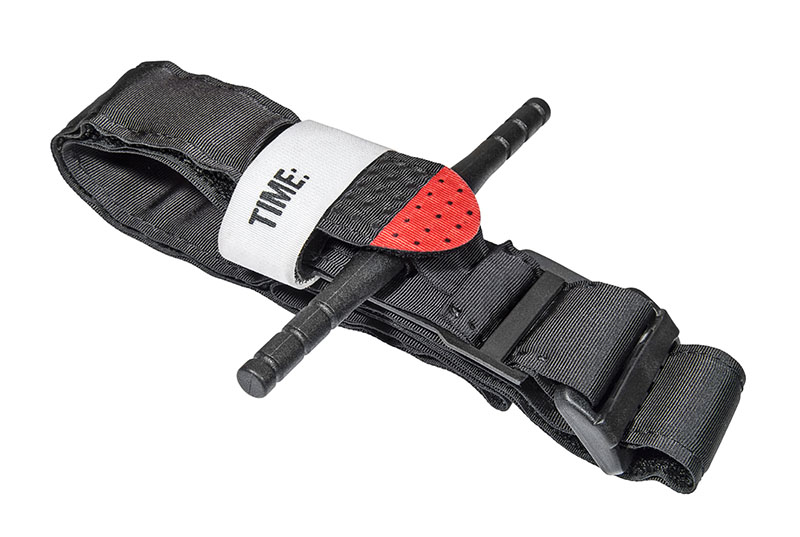
“I think it goes back to any bleeding that you feel is not going to be controlled. It’s better to err on the side of caution and apply a tourniquet because it could be extreme bleeding [and then it’s] two to three minutes before you bleed out,” Reichenbach said.
“[Y]ou can keep a tourniquet on for about four hours without any permanent injury … and in most cases that’s plenty of time to get you to professional medical attention,” he added.
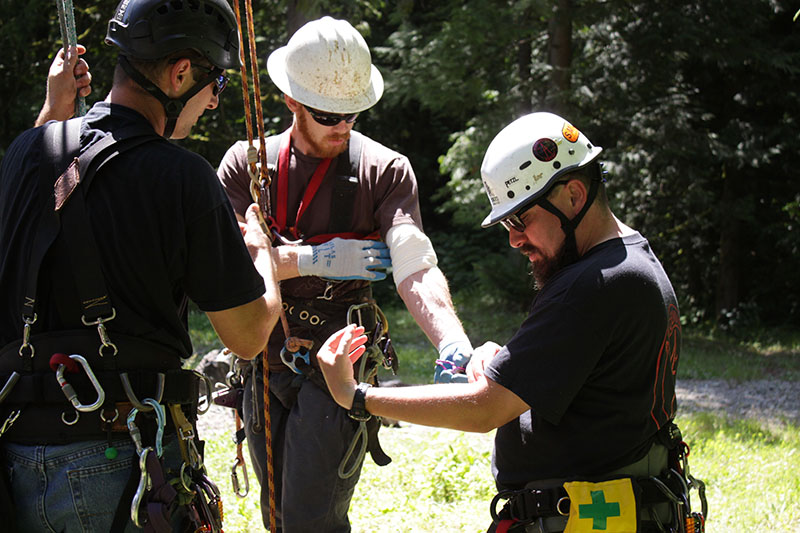
For those working at heights, Reichenbach recommends that all workers carry tourniquets in a consistent, protected location that can be reached quickly.
While arterial bleeds require immediate application to prevent death, there are instances in which applying a tourniquet would be more harmful than helpful.
“If you don’t have major bleeding, a tourniquet is not necessary,” said JD Stewart, director of workplace safety sales at North American Rescue. “That’s when you would just use direct pressure [or] something that’s very easily controlled with the emergency trauma dressing or some sort of pressure dressing,”
Reichenbach added that tourniquets are not used to control bleeding from the head, neck, or torso. In addition, he said, smaller wounds would be better treated with direct pressure, wound packing when appropriate, and pressure dressings under normal first-aid care.

The Role of EMS
Equally important after stabilizing the victim, is noting pertinent information to convey to first responders, such as:
- The job site address. All personnel should know the exact address of the work site or have GPS coordinates.
- The best access point for EMS. Let the dispatcher know of any gates, driveways, or obstacles.
- Who will call 911. Dedicate a person to meet direct responders.
- The mechanism of injury. This information would include whether the worker was aloft, how high the individual was, and what hazards are present, such as electrical lines, suspended limbs, or equipment or difficult terrain.
- Any treatment provided. Let the dispatcher know whether there is severe bleeding, and any treatment already provided. If a tourniquet was used, note the time it was placed on the victim.
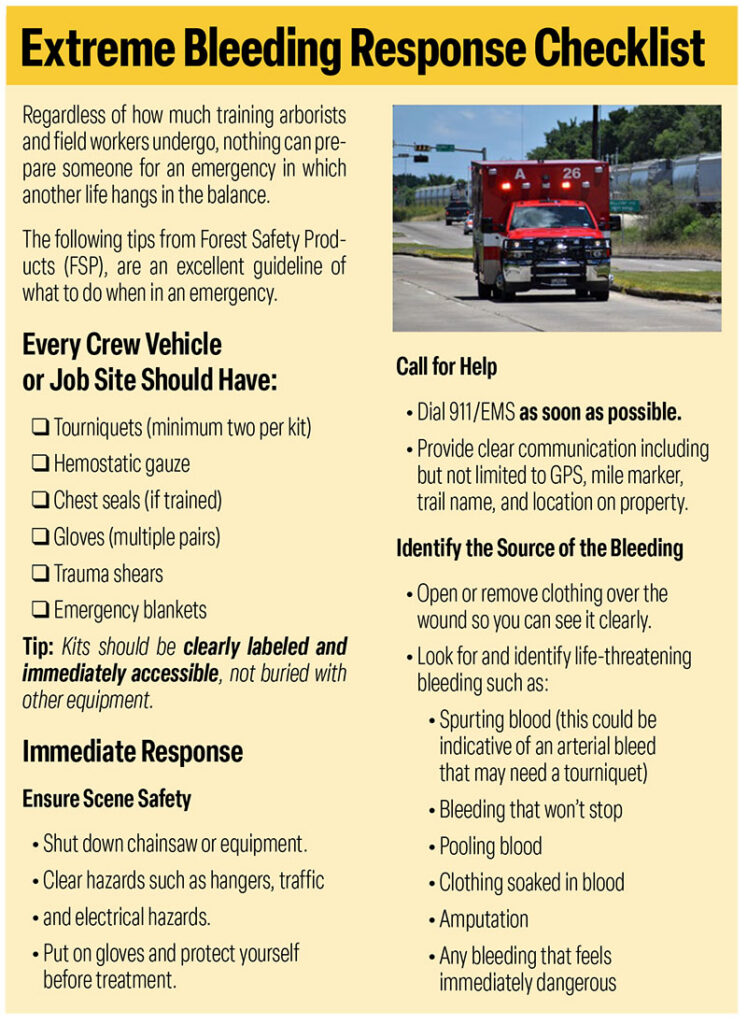
“We always make sure our workers know the exact location and address they are working at so if they need to call 911, they can give responders that information along with the type of injury, where the bleeding is coming from, whether the person is conscious and breathing and what treatment has already been given, including the time a tourniquet was applied since they can only be used for a short amount of time,” said Tadewaldt.
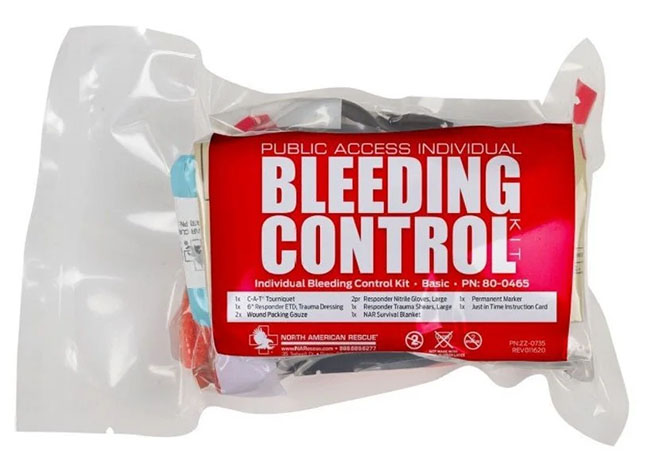
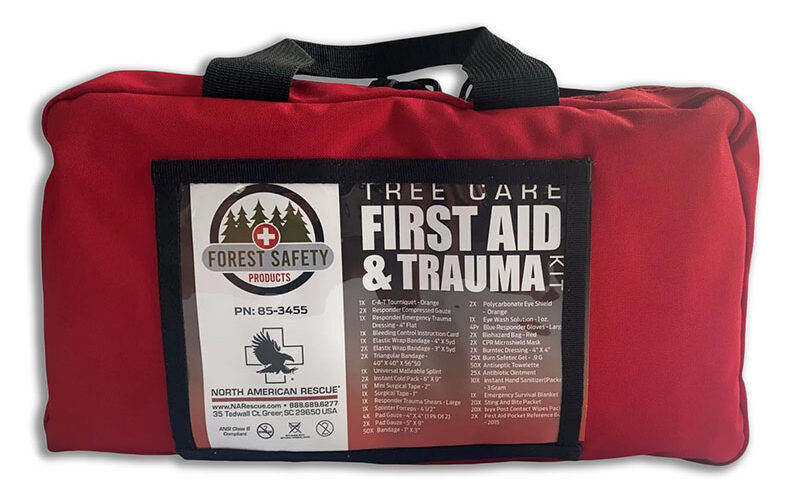
She added that the first-aid kits that are kept in the company trucks have gauze, pressure dressings, trauma shears, gloves, and commercial tourniquets.
“We make sure all members of our crew know where these supplies are and are trained to use them.”

First Aid Best Practices: OSHA and ANSI Protocols
Arborists work within a broad framework of regulations, standards and policies, including the International Safety Equipment Association, the Occupational Safety and Health Administration (OSHA), and the American National Standards Institute (ANSI).
Combined, these three organizations provide a symbiotic system for keeping workers safe on the job, while also holding employees accountable for compliance.
While the tree care industry currently lacks a specific OSHA standard, it is subject to the logging industry standard because of the high risk of injury associated with tree care work.
To understand how these two organizations work to keep arborists safe, it is important to first recognize the distinct roles each plays.
OSHA
According to Reichenbach, OSHA recognized that workplaces with a higher risk of injury may need enhanced bleeding-control supplies associated with Class A and Class B first-aid kits, that include various items such as:
- Tourniquets
- Hemostatic dressing
- Pressure bandages
- Wound packing gauze
- Bandages designed for chainsaw wounds
For logging operations, which apply to the tree care industry (for now), additional first-aid requirements include first-aid kits that are readily available and trained personnel in CPR.
“In tree care, ‘readily available’ can be a practical challenge,” said Reichenbach. “An injured worker may be 60-feet up a tree, across a property, or far from the truck.”
To this end, FSP advocates for a layered approach to safety: a tourniquet carried by the climber, additional bleeding-control supplies such as tourniquets and pressure dressings accessible to the ground crew, and a full first-aid and trauma kit kept with the vehicle or at the job site.
Tadewaldt said her company, Urban Forest Pro, takes preparedness on the job very seriously.
“OSHA requires us to ensure prompt medical attention is available and that we have adequate first-aid supplies and trained personnel. In our industry, having the right training and equipment cost at hand can save a life.”
ANSI
Separate and apart from OSHA, the ANSI Z133 requires tree-care first-aid kit contents to meet the Z308.1 standard and be appropriate for the type of job and number of workers.
The following is a workplace consensus standard used to help define appropriate first-aid kits:
- Class A for general indoor workplaces and low-risk of injury environments with common injuries such as small cuts, scrapes, and bruises.
- Class B for high-risk, complex, or heavy industrial environments such as construction, logging, or manufacturing where larger quantities of supplies and advanced items such as tourniquets and splints are needed.
In practice, Z133 is not a checklist or script but rather a safety framework for both employers and employees.
Prepare for the Worst, Train for the Best
“Hope is not a strategy,” said Ed Carpenter, director of operations for North American Training Solutions (NATS). “It really comes down to the discipline of training … culture and leadership.”
While Carpenter allows that cost and time were once something smaller companies could fall back on, he says now there is too much technology and hybrid learning solutions for those excuses to be valid.
“Information is pretty ubiquitous. It’s the desire and the drive to get the information and to bring that into the organization,” he added.
The risks associated with arboriculture can be immediate. Taking a proactive approach to safety and emergency preparedness not only helps tree care workers recognize hazards and respond effectively to emergencies – but also reinforces that safety is a priority. When owners and leaders consistently invest in training, planning and preparedness, they send a clear message that the well-being of their employees matters.