Hidden Hazards in the Canopy
Preventing Animal Bite Risks in Tree Care


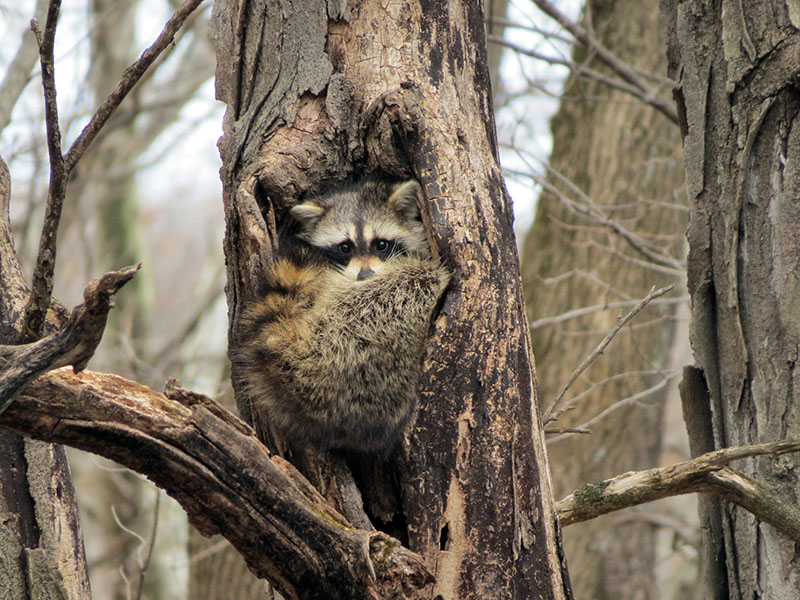
From furry creatures tucked away inside hollowed cavities to scaly and slithery reptiles hiding amongst the rocks and swamps, arborists regularly encounter various animals. What a jobsite is to us is a home to them, and it is understandable that when these creatures feel danger, they’re prone to defend themselves with what nature has equipped them with — their teeth.
While some bites — like those that don’t break skin — can amount to nothing more than a surprise and a Neosporin-coated bandage, other more substantial bites can lead to serious bodily injury, allergic reaction, or disease transmission. And all bites should be treated with the same caution and care.
The good news, though, is that most bites are preventable with the right knowledge, awareness, and effective use of protective personal equipment (PPE).
In this article, we’ll walk through several of the most common animals associated with biting hazards for arborists, their typical behaviors, warning signs to watch for, and related tools and equipment to help protect you from a bite.
Note: Keep in mind that this is not an exhaustive list. The great outdoors is home to many more hazardous and potentially risky animal encounters. So, it’s important to research and understand the specific wildlife thriving in your region, so you can stay prepared and aware on every job site.
But First, Perform a Job-Briefing
Before work begins, Dawn Thierbach, ISA Certified Arborist and co-proprietor of Victorian Gardens, a full spectrum tree and shrub care company based out of Michigan, emphasized a few practical ways that crews can assess a work site or tree for potentially problematic animals.
“You’re supposed to be doing a job briefing anyways, so just make sure you’re assessing thoroughly for hazardous animals,” she said.
As part of the assessment, crews should take the time to scan the ground and the tree itself. For example, if raccoons are a concern, look for signs of hollowed cavities in the tree where nests may be tucked inside. If you happen to find this, Thierbach said to perform a hazardous report on the tree.
“When you’re doing this, you’re looking to see if the tree is going to fall over, or if there’s widowmaker hangers,” she noted. “And you’re also looking for animal nests — bees nests, raccoons, and squirrels, those kinds of things. But sometimes it’s hard to see a nest in a full foliage tree, so a thorough assessment is very important.”
In addition to what’s visible, Thierbach recommends evaluating the worksite and surrounding environment for signs of wildlife activity.
“Is there tall grass? Warm rocks? Are there any hollow spots where animals can hide? If so, you can bet your boots there’s probably some kind of critter in that tree. Those are the kinds of things you’d be looking for in the job briefing.”
Although this is often part of the job briefing, checking for hazardous animals can often be overlooked. Taking a few extra minutes to identify any risks before work begins can, and will, help keep crews safer and more efficient.
Tree Dwelling Mammal Bites (Raccoons and Squirrels)
When an animal feels threatened, trapped, or is protecting a nearby nest, its first instinct is to defend itself. For arborists, that can mean bites or scratches from local wildlife while on the job. Although these injuries can be quite painful, the greater concern is the risk of disease transmission such as rabies and other infections.
“When we talk about bites, it’s mostly dog bites,” said Thierbach. “But when you’re talking about what animals they encounter, climbers run into squirrels and raccoons a lot — and they will bite. But most of the time, climbers know enough to stay away.”
While working at height, climbers face the greatest risk of encountering animals like raccoons and squirrels, especially when a tree has a hollow tree cavity or is home to a nest.
Common Encounters
Raccoons
“If you’re removing or pruning a tree in the spring, you’re going to run into some raccoons,” Thierbach said.
As with many woodland animals, spring is when female raccoons give birth and begin raising their young. This means that aggression levels will be at an all-time high, as mother raccoons have one primary goal — to protect their kits.
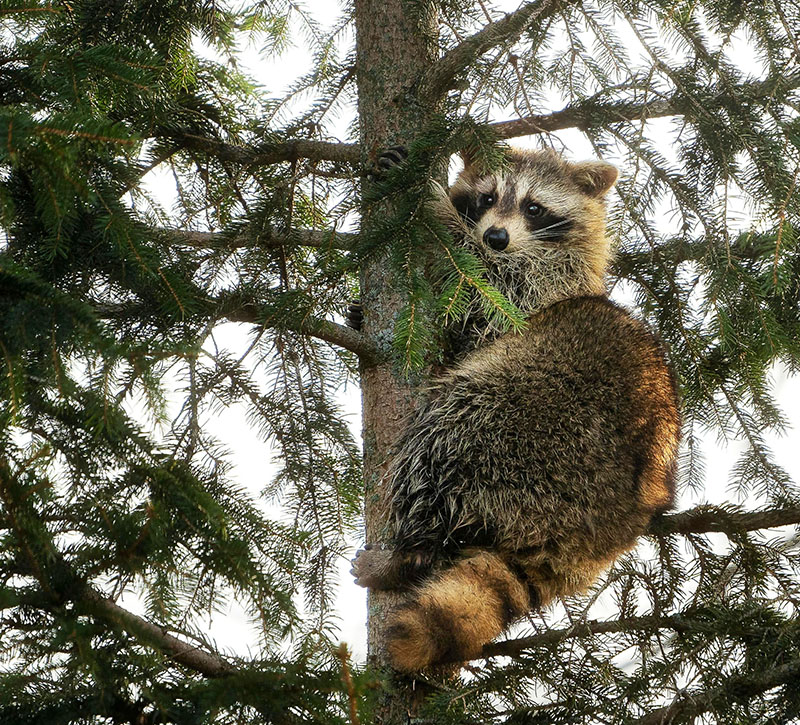
“It’s not a question of if they will or not — mother raccoons will attack,” Thierbach explained. “A few years ago, my husband was pruning a tree that a raccoon family called home. He had to put something over the hole where the family lived because the mom kept wanting to come out. She will bite, but she’s doing it to protect her babies.”
While working in a tree, options are limited when it comes to defending against a protective mama raccoon.
“You could rev your chainsaw to try and scare it off, but most of the time they won’t run away if babies are involved,” Thierbach cautioned.
In situations like this, if tree removal is necessary, Thierbach recommends discussing other options and timing with the client. In this case, it might be worthwhile to suggest postponing the removal until all animals have vacated the tree. For raccoons in particular, mothers will lead their kits out of the den to a new location at about eight weeks of age. That means you could be waiting to service that particular tree until late spring to early summer.
For the most part, raccoon bites (especially in the spring) are defensive, but it’s always best to take the bite seriously. These aren’t just cute and fuzzy animals — raccoons can carry dangerous diseases such as rabies, requiring prompt medical care.
Squirrels
Not surprisingly, climbers also run into tree squirrels quite often at height, and according to Thierbach, they can be “devious little rats.” They take defensive measures to the next level — to the point where they may almost seem spiteful.
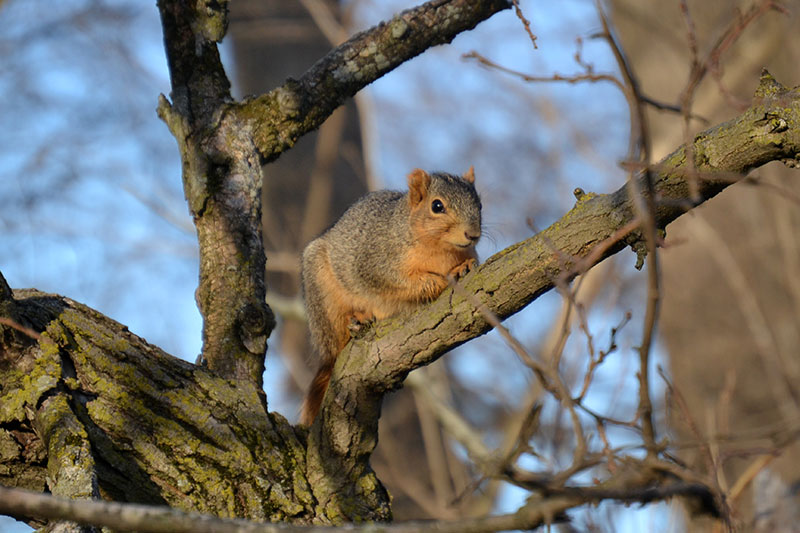
“Squirrels aren’t as nice as everybody thinks they are,” she chuckled. “They’ll get out on a branch above and purposefully urinate on you.”
Like raccoons, tree squirrel mothers are highly protective of their nests and may attack if they feel there is a threat. Different from their masked neighbors, though, there is no waiting out tree squirrels until denning or nesting season is over. These are year-round habitants that can pop up in a variety of tree species and are especially fond of oak-hickory forests.
Although they’re smaller in size, squirrels can still bite and scratch. After all, their teeth need to be strong enough to bite through tree nuts, so it’s easy for them to do damage to a finger or two. Despite their small size, they should still be treated with the same caution as larger tree-dwelling creatures.
PPE Recommendations
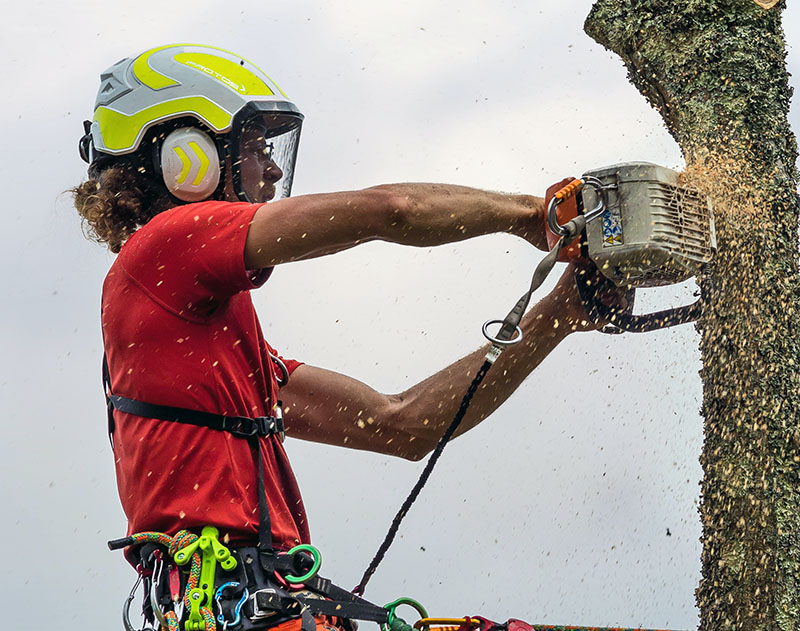
While raccoon and squirrel bites can’t be fully prevented or ruled out from the field, PPE serves as an important tool providing an extra layer of protection.
Thierbach recommends the following:
- Wearing heavy-duty, puncture-resistant gloves to help protect against bites and scratches;
- Using eye and face protection to shield against claws, debris, and even urine; and
- Wearing long sleeves and protective outerwear to reduce the amount of exposed skin.
In addition to PPE, Thierbach advises arborists to stay aware of their surroundings and avoid direct interaction with any wildlife as much as possible.
“Honestly, your best defense against an animal bite is staying aware and giving nature her space,” Thierbach stated.
Reptile Bites (Alligators and Snakes)
Alligator Bites
While you can find squirrels and raccoons just about anywhere in the United States, there are a few animals home to the south that can make the job of an arborist a bit more dangerous. Alligators are most commonly found in warm, swampy regions throughout South Carolina, Georgia, Florida, and Alabama — and yes, they can and will bite. With a 2,000 to 3,000 pound per square inch (psi) bite force, an alligator can do some serious damage to a human, causing severe injury and even death.
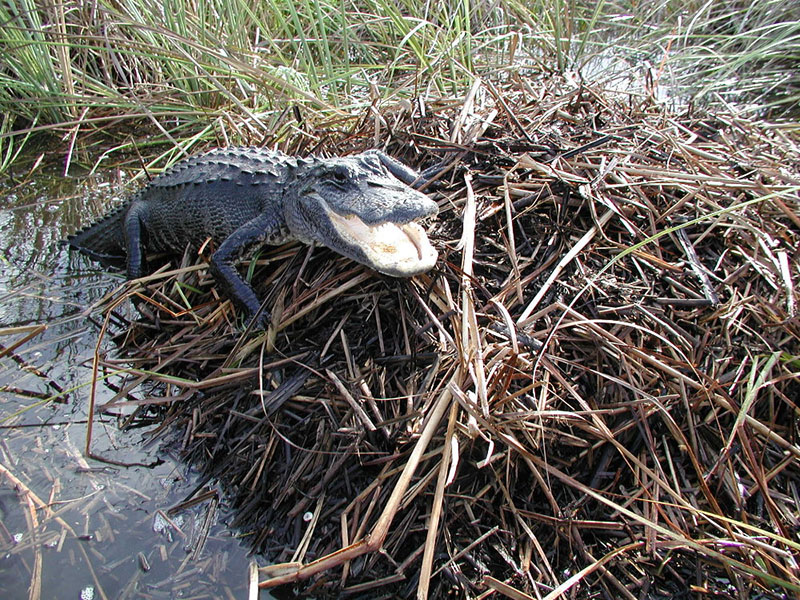
“You might encounter an alligator while working on a golf course,” said Thierbach. “They’ll just walk across the greens, usually because there are lakes or little ponds nearby. And the scary part is you might not even know one’s there.”
Whereas smaller critters may show warning signs before biting, like chittering or raising their tails, gators don’t always give a warning before an attack. In many cases, they may approach quickly and bite without any signs of aggression beforehand. The good news, though, is that alligators don’t necessarily seek out humans to bite — let alone eat. But, if they are provoked or feel threatened, an alligator isn’t afraid to attack.

According to the Florida Fish and Wildlife Conservation Commission, nesting season for these reptiles occurs in late June to early July in which females will deposit their eggs close to the water’s edge. If you find yourself working near still water in this region, keep an eye out for mounds of dirt and vegetation that might resemble a compost pile. Chances are there are eggs incubating in the center and a mama gator lurking nearby.
Snakebites
Snakes often get a bad rap from the typical homeowner, but in actuality, they help keep many other pests under control. For an arborist, seeing more snakes could mean seeing fewer squirrels and other rodents hiding out in the hollows or branches of a tree.
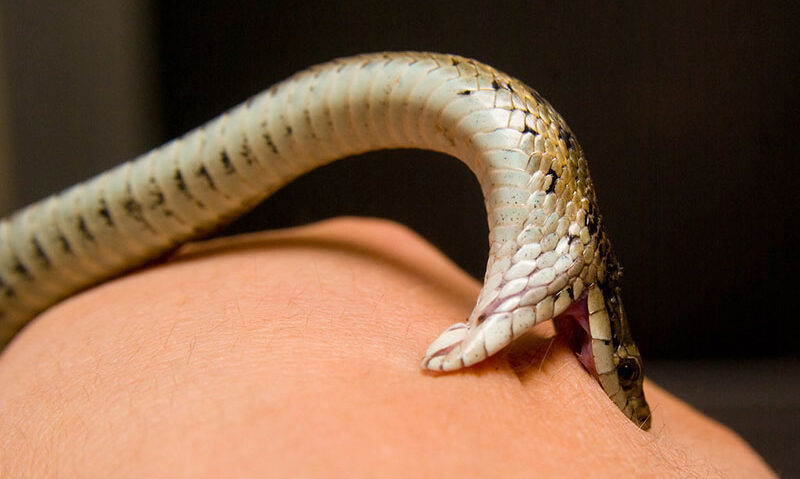
While many assume snakes are only a ground-level hazard, arborists should be aware that some species are excellent climbers and may be found hiding out among the branches — and can blend in quite well among your ropes.
Regardless of if they come from venomous or nonvenomous species, snakebites require immediate medical attention to reduce the risk of swelling, prolonged pain, infection, and, in severe cases, tissue damage and even death.
“If a worker is bitten by a snake, don’t delay,” said Thierbach. “Get them to the hospital as quickly as possible to receive medical attention.”
Identifying Common Snakes
Snake species vary by region, so it’s best for tree workers to research and familiarize themselves with the types of snakes common to their area. When in doubt about a snake’s venom, maintain your distance and alert your crew of its presence.
Some venomous snake species found in the United States include:
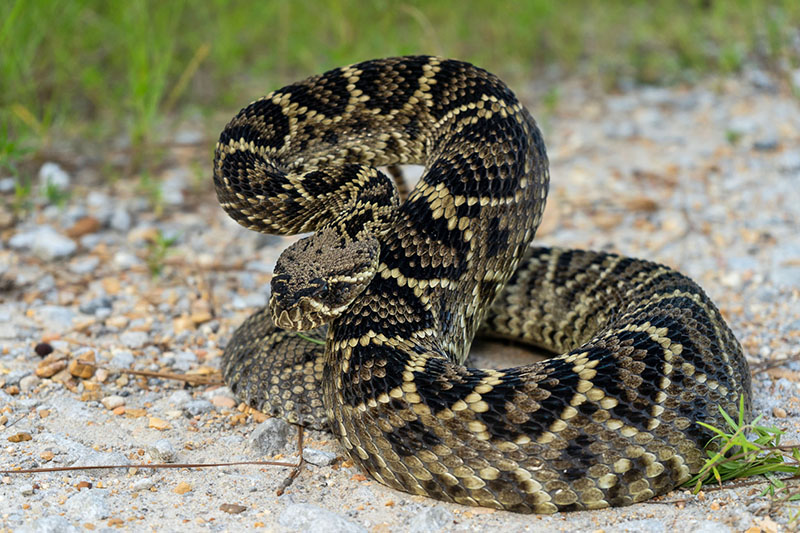
• Pit vipers, which include rattlesnakes, copperheads, and water moccasins (cottonmouths). These snakes are often found in warm, wooded, and even swampy environments. Pit vipers are characterized by triangular-shaped heads, vertical pupils, and long, hinged fangs. They come in a variety of colors and tend to blend in very well with their surroundings. Rattlers are one of the few snakes that will give you warning of their presence before they strike. So if you hear one, stay clear of that area.
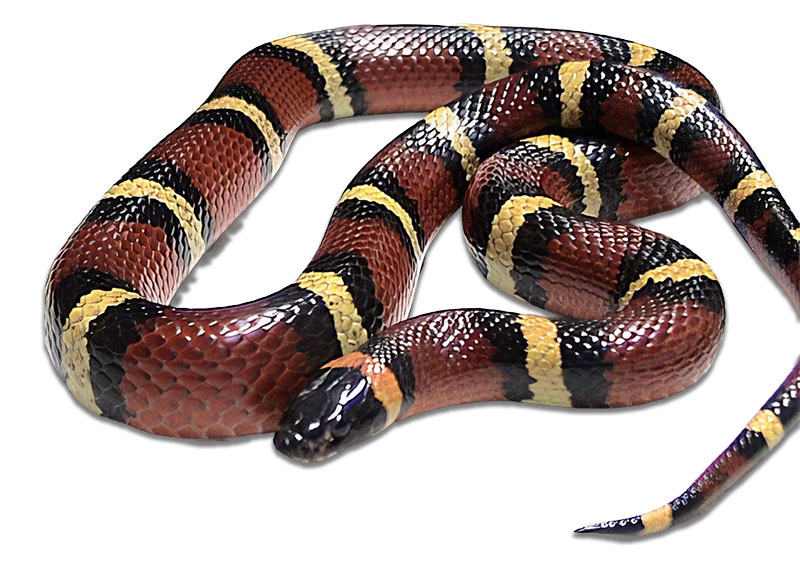
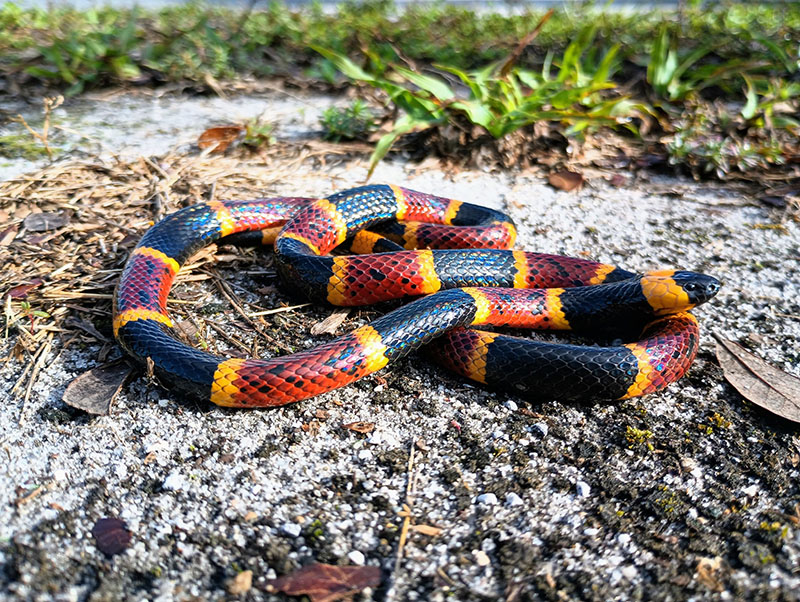
• Coral snakes, which are smaller in size and are identified by their red, yellow, and black banding. These are often confused with the nonvenomous king snakes or milk snakes, both of which share the same coloring as coral snakes but in a different pattern. To identify a coral snake, remember the saying, “red on yellow, kill a fellow.” If yellow touches red on the snake’s scales, it is likely the venomous coral snake. If yellow touches black, it is likely either a milk snake or king snake.
Not all snakes are venomous, but that doesn’t mean bites can’t, or won’t, occur.
A couple of the more common nonvenomous species include:
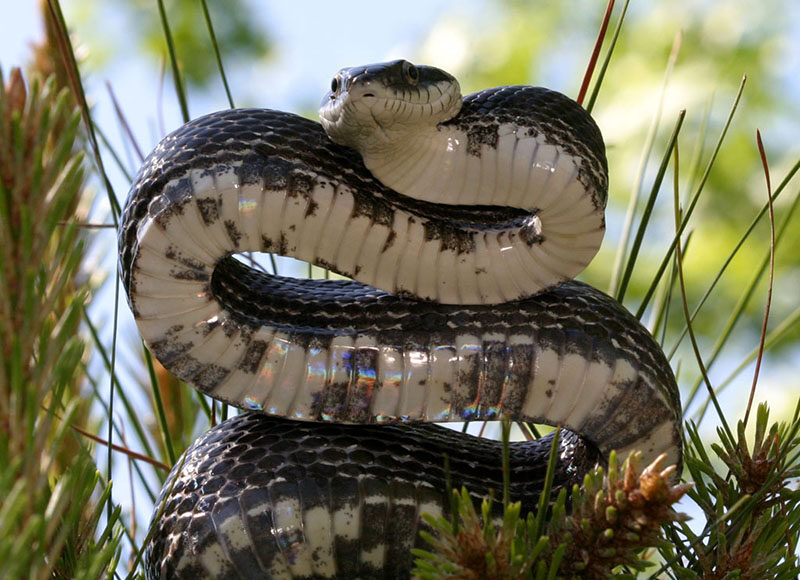
• Rat snakes: Agile climbers, rat snakes are likely the most common slithering friend you’ll find among the branches. These snakes tend to have black scales along their back and grayish/white scales along their bellies and a flatter figure that allows them to scale the trees more easily. As constrictors, these snakes are less likely to strike than they are to freeze if met with danger. Their first line of defense is to emit a foul-smelling odor. As a last resort, they may try to bite.
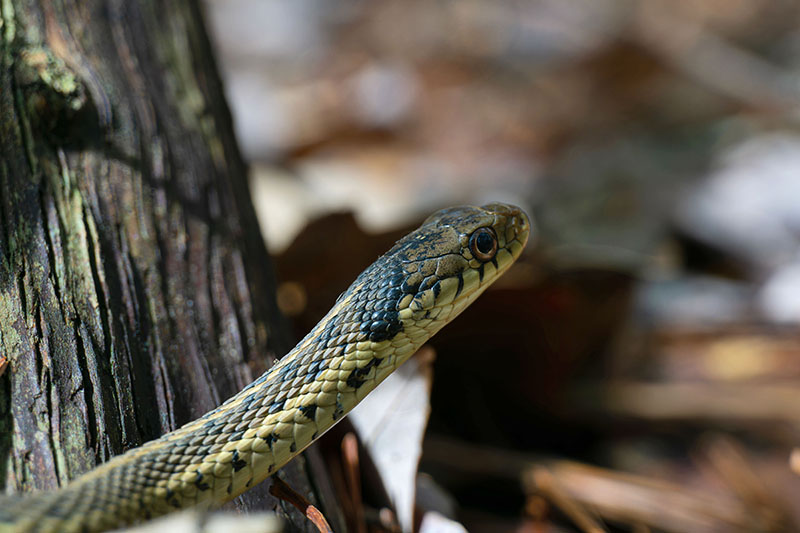
• Eastern garter snake: These snakes may resemble climbing rope most closely with their long, bright stripes against dark scales. Their small, oval heads are the biggest indication that their bites are not venomous. They also remain fairly small compared to other species, spanning only three to four feet as full adults.
Thierbach also warned about regions where boa constrictors may live, such as Florida and Alabama. Although they aren’t venomous, they are known for their powerful constriction — wrapping their bodies around prey and squeezing, restricting blood flow, often causing swift and serious bodily injury and even death.
Symptoms of a Snakebite
Venomous or not, snakebite symptoms appear almost immediately and may include:
• Nonvenomous: Puncture wound or marks, minor pain with swelling around the injury site.
• Venomous: Intense pain or burning, rapid swelling and bruising, weakness, dizziness, lightheadedness, a metallic taste in the mouth, and labored breathing.
But the damage doesn’t end there. Long after a snakebite, particularly a venomous one, complications and long-term effects can linger. Tissue death, hemorrhage, and systemic shock are among the acute issues, while chronic pain, reduced mobility, and nerve damage can stick around for the long-term.
PPE Recommendations
According to Thierbach, there really isn’t much tree workers can do or wear to prevent an alligator attack. The most important precaution is awareness and, if a gator is spotted, maintain a safe distance at all times.
“Check the area for gators, and keep your eyes peeled while you work,” she advised.
Snakebites, however, are a bit easier to avoid with proper PPE. Thierbach suggests the following:
- Wearing high boots, especially in warm environments with tall grasses or rocky terrain;
- Using thick work pants or chainsaw chaps for leg protection; and
- Wearing heavy-duty gloves for handling debris, logs, and brush.
Pre-hospital Care for Snake Bites
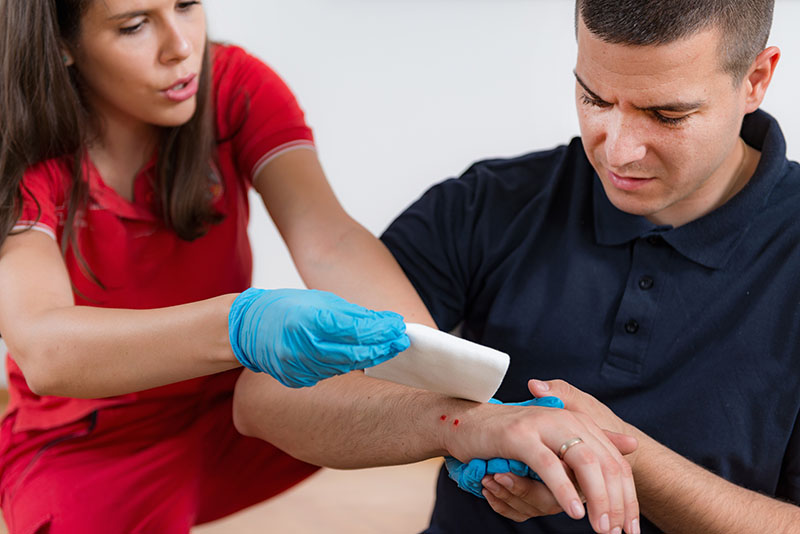
If someone is bitten by a snake — venomous or not — keep the bite above the heart and plan to transport them to the nearest hospital immediately. If you’re able to, take a picture of the snake from a safe distance to help doctors identify the species, but do not bring a live or dead snake to the facility.
Per the National Snakebite Support, DO NOT:
- Allow the patient to drive themselves;
- Try to suck out the venom;
- Tourniquet the area; or
- Pack the extremity with ice.
What To Do If You or a Co-Worker are Bitten
No matter which animal is responsible for a bite, Thierbach said the first and most important step is to stop work, inspect the injury, and make your way to the nearest ER — especially if you’re unsure of the culprit.
“You don’t know if that animal has rabies,” she said. “There might be a chance you’ll need to get rabies shots to prevent the disease. If it’s springtime, though, it’s most likely the bite is coming from a mother defending her babies. But, you just don’t know. Always head to the nearest hospital just in case.”

Building a Safer Work Culture
Building a safer work culture includes all hazards on the job site, including animal-related injuries. From a safety culture perspective, Thierbach recommends that all arboriculture companies implement training and protocols to better protect arborists while out in the field.
“Companies should be creating their own presentations that layout the animals local to their region that their crews might encounter,” she said. “The best course of action is to educate your crew so they’re more aware of their surroundings.”
In addition to familiarizing themselves with local wildlife, Thierbach said tree workers should also be educated on what to do if someone gets bit.
“They need to know the plan of action — what to do if you have a boa constrictor wrapped around your leg or your body, and what to do if you get bit by a raccoon. This is an important educational opportunity for all companies.”
At Victorian Gardens, in collaboration with Streamside Green, Thierbach and her colleagues offer annual webinars and classes on topics related to bites, stings, and poisonous plants.
“Educate your crew. They have to know your area, because every state is different. Education, in my opinion, is the foundation for building a safer work culture for everyone,” she concluded.