Living with Lyme
The Aftermath of a Tick Bite According to ETW Certified Arborist Felixia Banck
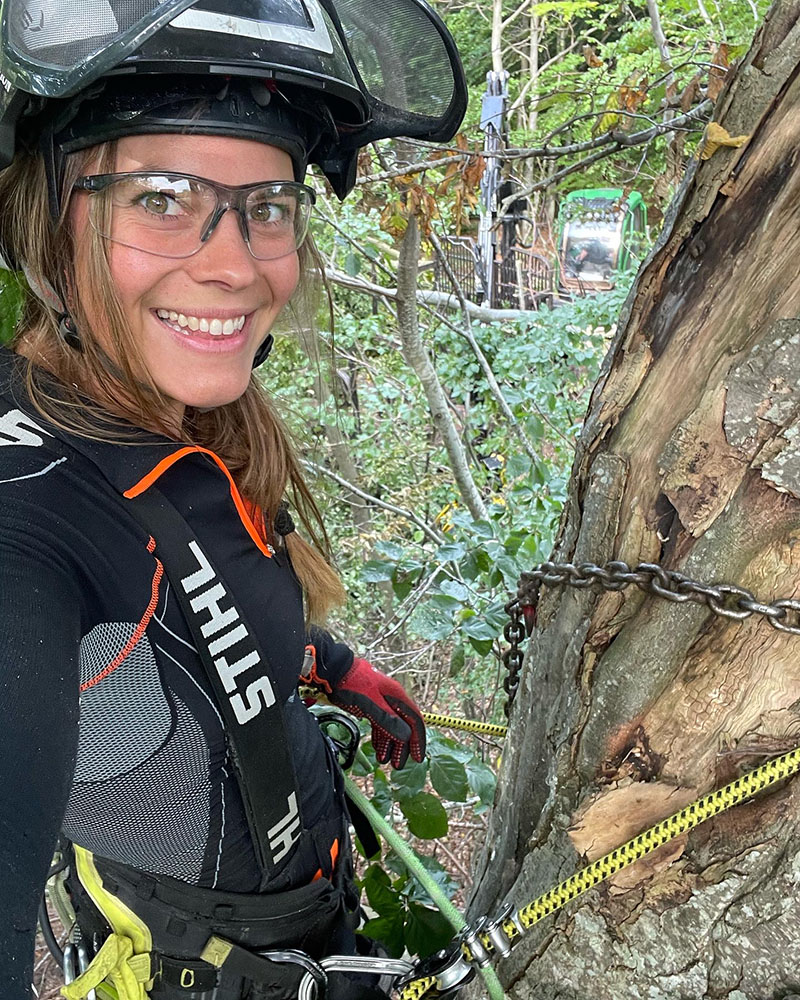
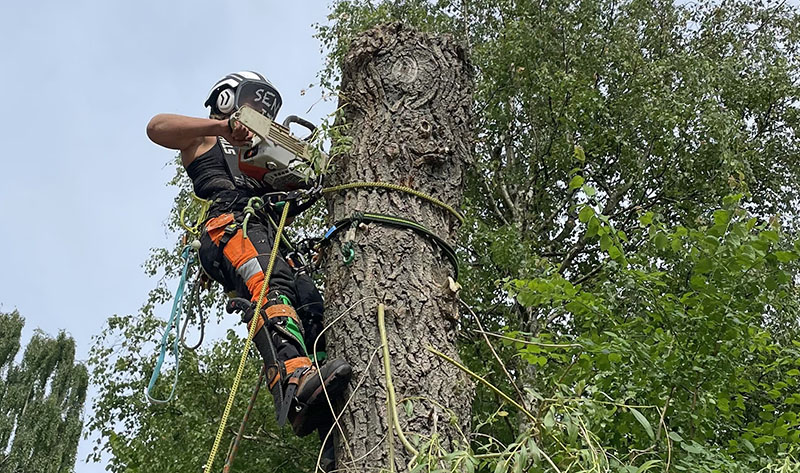
As a Forest & Nature Technician and European Tree Worker (ETW) certified climbing arborist, Danish arborist Felixia Banck spends most of her time working among the trees and heavy brush — the very place where crawling critters, like ticks, love to hide. And while the risk of a bite was always present, Banck never truly expected to contract the disease, herself.
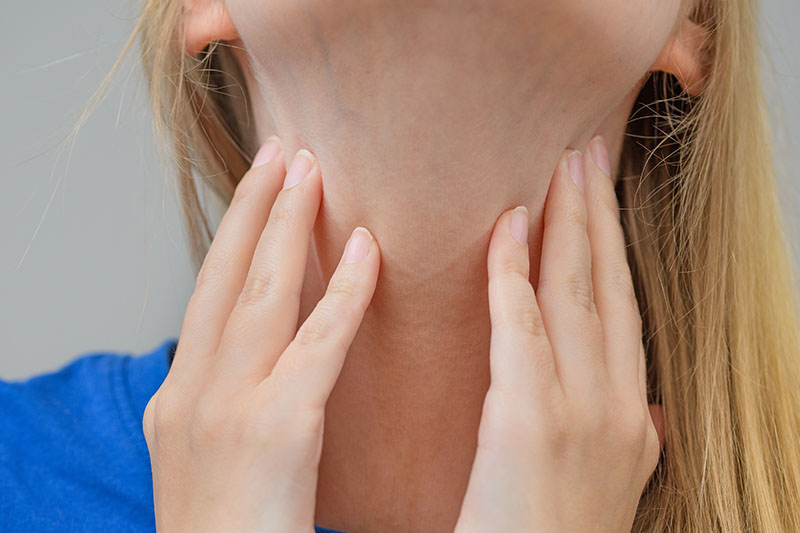
In a hard labor job like tree care, it’s easy to mistake more serious musculoskeletal symptoms for just overusing your muscles. Carrying brush, operating chainsaws, and even prolonged hours on your feet can leave you with aches and strains at the end of the workday. But when Banck began noticing persistent and severe shoulder and neck pain, she decided to request a referral to a physiotherapist.
“It wasn’t until my doctor started asking me all kinds of questions like, if I had experienced fevers, headaches, tiredness, visual and sensory disturbances, and so on — [I realized] I had all of it,” Banck recalled.
An initial blood test was performed and indicated elevated infection numbers.
“Then they did another blood test that showed Lyme disease. I was referred to the infectious disease department at the hospital where they did a spinal tap.”
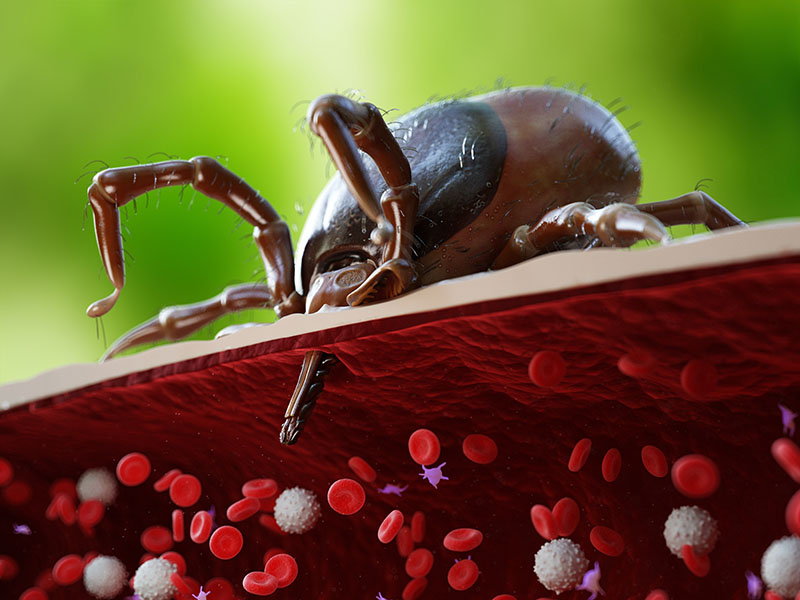
That’s how doctors discovered that Banck had contracted both Lyme disease — caused by the Borrelia bacteria — and tick-borne encephalitis (TBE), a viral infection caused by flavivrius.
Double infections occur quite frequently with tick bites, often resulting in increased complications. And while Lyme and TBE may develop at the same time, their symptoms can vary within the infected individual and appear in stages.
With tick-borne diseases becoming more prevalent across the world, Banck has made it her mission to raise awareness — especially within the tree care industry. In our conversation, she reflects on her experience with Lyme disease and TBE, and shares insights on tick prevention, symptoms to watch for, and more.
Q: How has Lyme affected your ability to do your job in tree care? Are there certain aspects of work that have become more difficult than they were before? If so, how have you adapted?
A: For six months, I wasn’t able to do any kind of tree work. One thing was the all-consuming extreme fatigue and tiredness. I was often struggling to stay awake until 7 p.m. Another was the dizziness, light sensitivity, and memory loss/cloudy brain. Not great combinations when working with chainsaws or swinging from a rope.
Now, after nine months, I’ve been able to do a couple of days of work, but nowhere close to what I normally would do.

Q: Looking back, were there symptoms or warning signs that you initially dismissed or attributed to the physical demands of working in tree care?
A: I dismissed everything, thinking I’d just been working too hard. In our line of work, it’s not uncommon to pull a muscle or get an injury.
Q: Have you ever had to make a professional decision (whether that meant slowing down, taking time off, etc.) because of your health? If so, what was that like?
A: My diseases have caused me to have to stop working and it’s killing me. I’m a very active person — running my own tree care company, climbing or doing forestry work all day every day. When I get home, I chop wood and do Timbersports [lumberjack] training, go on hikes, walk the dogs, and so on. Having to stop doing all the things that I love has been extremely difficult.
The worst thing is that every time I try to push myself, even just a little, I go back to start with all the symptoms and fever yet again.
Q: As someone who spends so much time working outdoors, has your relationship with ticks and tick prevention changed since your diagnosis?
A: When the doctor at the infection disease department at the hospital asked how I discovered a tick on my body, I told him that “it tickles” or itches. He then informed me that when the tick bites, it spreads a protein into the body – a protein you don’t typically feel. But once you’ve had an excess amount of tick bites, your body will recognize the protein and cause it to itch. So, the itching was a sign of having many ticks on my body.
I’ve become much more cautious with ticks now. I check my entire body every day and take pictures of the bite after removing the ticks.
Q: What do you wish you had known about Lyme and tick-borne illnesses before you became sick?
A: I wish I had read up on the symptoms so I could have gone into treatment earlier. In my case, because I’ve also been diagnosed with TBE, I’m no longer getting any treatment because you can’t treat TBE – they share the same symptoms.
Q: Do you think people in the tree care industry take tick exposure seriously enough?
A: I know I didn’t! I think we just carry on with the job not really caring much until it hits you or someone very close to you, and you see just how much it affects your life.
Q: What does tick prevention look like now for you on the job site? Do you use certain clothing or PPE or habits that you didn’t think about previously?
A: I had tried to do the prevention I could by getting vaccinated for TBE, however I still got the disease. In my experience, I’ve found a tick on me on days when I’ve been wearing long socks, chainsaw boots, and chainsaw trousers with tick protection, and I’ve found them on me when wearing shorts. So, I don’t see a difference in what I wear. The difference to me is checking my body thoroughly throughout the day and before going to bed.

Q: What advice would you give to a tree care professional who starts experiencing Lyme symptoms but assumes it’s just part of the job or getting older?
A: Don’t make the mistakes I did! It’s so easy to get a blood test to see if you have Lyme disease — so just get it done! It’s not until later you’ll need the lumbar puncture. Read up on the symptoms and react.
Yes, we get sore, tired and stiff muscles from the job, and yes, we do get older, but it’s still better to get a professional opinion if you suddenly don’t feel like yourself anymore.
Q: Since contracting Lyme disease and TBE, what is one change you’ve made that has helped you manage your symptoms?
A: It’s been nine months since I was diagnosed with my tick-borne diseases, and I’m still not close to being at the level I was before. I still can’t work a full week. I still don’t recognize myself energy-wise, and I still have lots of symptoms. For me, the biggest change for improvement has been changing my diet completely.
The biggest [diet] change came after cutting away refined sugar. Lyme is an infection, and sugar feeds the inflammation — so removing that from my diet helped a lot. I could finally get out of the extreme fatigue I had been stuck in and feel a bit of energy coming back.
I also try to stay away from processed foods and just feel my body respond better to eating “cleaner foods.” I wouldn’t say I was eating a lot of processed foods before, but I didn’t really pay much attention to what preservatives, and so on, was added to the food… I do now. I also make a lot more from scratch, so I know what’s in it.
Since changing my diet, energy levels have been where I’ve seen the biggest change, and less joint and muscle pains.
Q: Is there anything else you’d like to add to this conversation?
A: Tick-borne illnesses need to be taken seriously! It’s a big help if you read up on the disease so you can be informed if you or one of your coworkers get it… it’s not something you can power through — trust me!
From Banck’s experience, personal protective equipment (PPE) for Lyme and TBE includes more than repellent, long socks, and thick layers. Just as important as the physical items is the knowledge we arm ourselves with before entering the field.
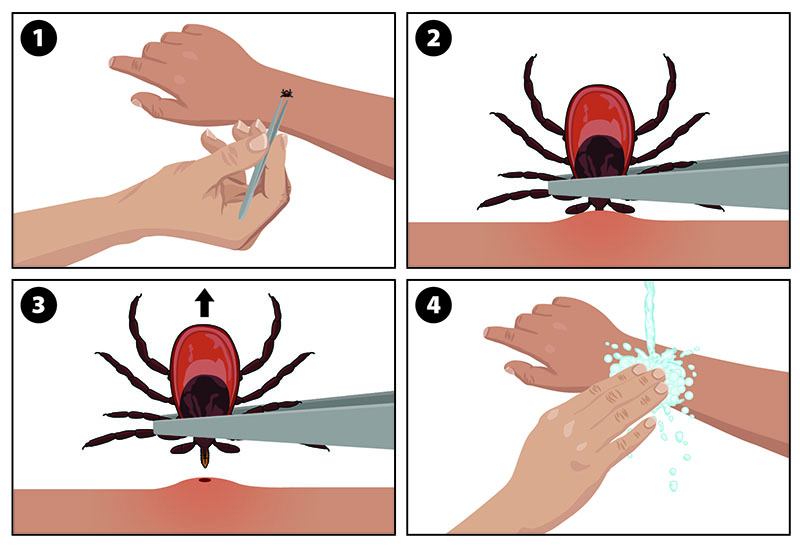
Banck urges tree care professionals to read and understand the symptoms of tick-borne illnesses so that you can receive the proper treatment should a bite occur.
“Yes, we get sore, tired and we get stiff muscles from the job… and yes we do get older, but it’s still better to get a professional opinion if you suddenly don’t feel like yourself anymore.”
Follow and connect with Felixia on Instagram, Facebook and YouTube.
*Note: This article is for informational and educational purposes only. If you suspect you have contracted a tick-borne illness (including TBE and Lyme disease), consult a medical professional promptly for expert advice and accurate treatment.
TBE Symptoms
Stage 1 (The Flu-Like Stage) – TBE symptoms begin around day 7 to 14 after a tick bite and only lasts for a few days. Symptoms include:
- Fever
- Headache
- Fatigue
- Body aches and pains
- Nausea or vomiting
This round of symptoms is frequently mistaken for having the flu, or the common cold, because the patient often feels better for about a week. Then the second wave of symptoms hit:
Stage 2 – This is known as the “Neurological Stage,” where the virus spreads to the brain and central nervous system causing the following possible symptoms:
- Confusion
- Stiff neck and shoulders
- Loss of coordination
- Seizures
- Weakness or paralysis (especially in the limbs)
Lyme Disease Symptoms
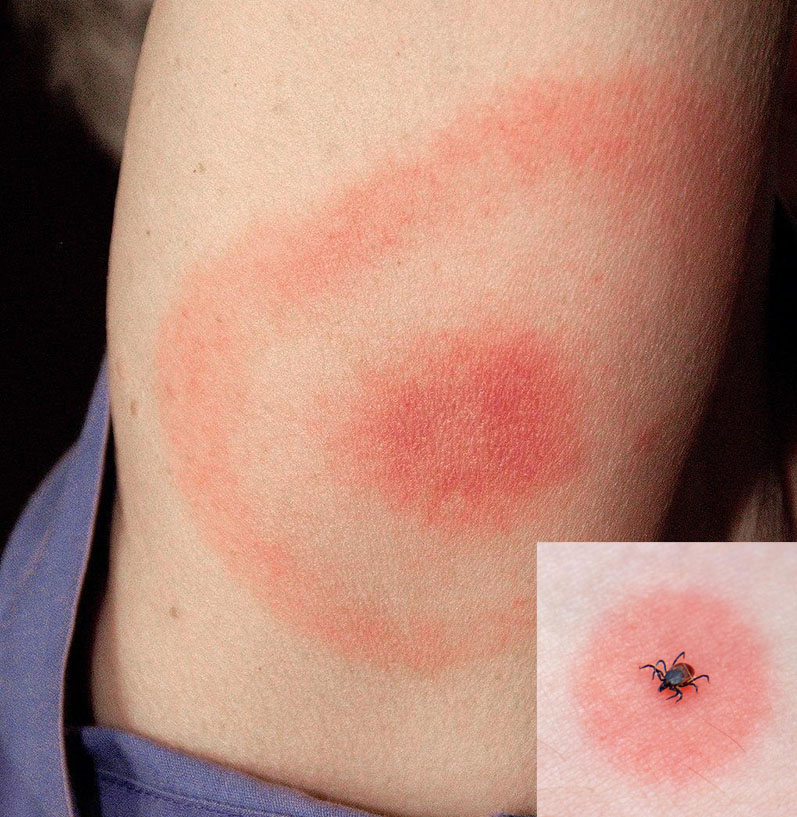
Like TBE, Lyme disease symptoms may not all appear at once. Along with flu-like symptoms, the most common initial symptom of Lyme is a bull’s-eye rash; however, this reaction can be missed and should not be treated as the only indication of an infection. These symptoms can appear anywhere between three to 30 days after a tick bite.
Often, medical intervention can help alleviate Lyme disease symptoms. But, if left untreated, the infection can spread throughout the body and cause symptoms like:
- Rash
- Facial palsy
- Nerve pain
- Lyme carditis – inflammation of the heart
- Severe headaches and neck stiffness (meningitis)
- Long-term: arthritis pain and chronic neurological issues