Setting Up Drop Zones in Tree Care
A Practical Guide
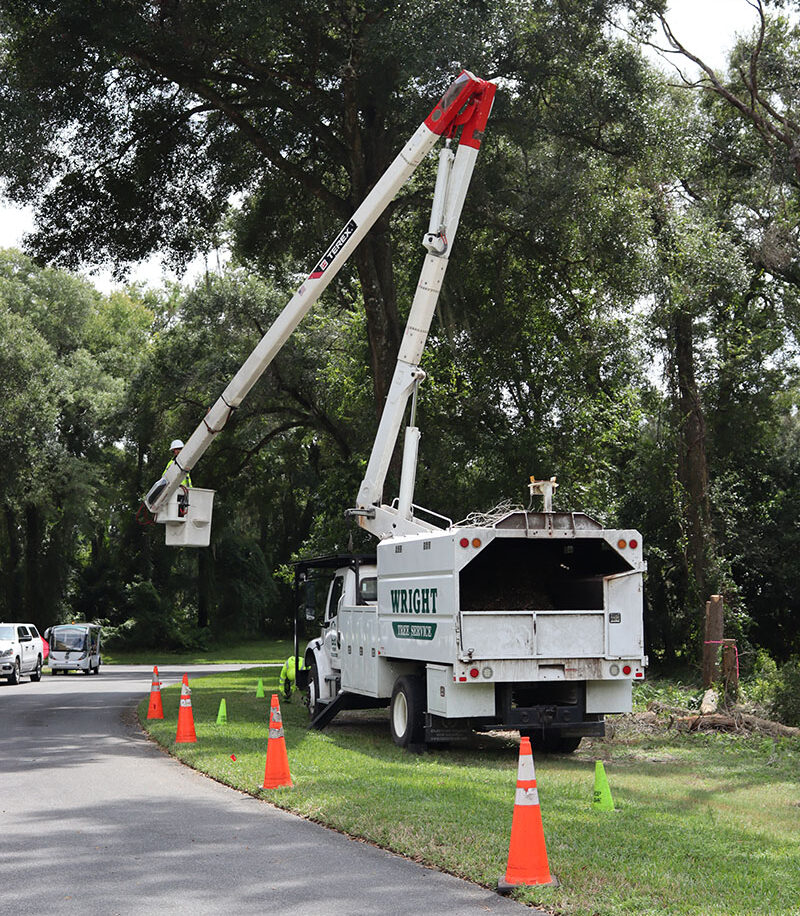
A limb breaks free from the canopy, swings past a neighboring branch, and strikes the ground several feet from where the climber expected it to land. Below, a ground worker watches the movement, waiting for the signal that it is safe to retrieve the brush. Beyond the work area, a pedestrian approaches an open sidewalk.
In tree care, the space beneath and around a tree can change from a work area to a hazard area in an instant. A properly established and managed drop zone helps keep people out of the path of falling and moving material — and gives the crew a clear plan for controlling that space.
Whether a crew is pruning a small ornamental tree or dismantling a large declining tree, drop-zone planning is one of the most important parts of a safe and efficient operation. It protects climbers, ground workers, pedestrians, clients, nearby property, and the public. When everyone understands where material may travel, who controls access, and how communication will work, the crew can approach the job with greater confidence.
Under ANSI Z133 safety standards, crews must recognize falling-object hazards, keep unauthorized people clear of exposure areas, communicate effectively, and adjust work practices as conditions change.
This article provides a practical framework for establishing and managing drop zones in professional tree care. It should be used alongside the current Z133 standard, applicable regulations, company procedures, site-specific job planning, and manufacturer instructions for equipment.
Understanding the Purpose of a Drop Zone
The purpose of a drop zone is straightforward: Keep people out of areas where falling or moving material could injure them.
In tree care, however, hazards do not always move straight down. A limb may swing after release, bounce after impact, roll downhill, slide across a roof, deflect off another branch, or be redirected by a rigging system. A cut tree section may rotate unexpectedly, particularly when it is under tension or compression. Equipment can also fail, and smaller objects — including hand tools, carabiners, saw parts, dead twigs, and broken rigging components — may fall outside the anticipated landing area.
For that reason, a drop zone should never be treated as a small circle directly beneath the climber. It is a dynamic hazard area that accounts for the entire path of material, from the work position to its final resting place.
Before overhead work begins, the crew should establish and maintain a drop zone by:
- Identifying where cut material, tools, and debris may fall or travel.
- Determining how far material could swing, bounce, roll, or skid.
- Removing or restricting access by workers, clients, pedestrians, and vehicles.
- Assigning responsibility for monitoring the area.
- Establishing clear communication procedures between the climber and ground crew.
- Reassessing the zone whenever work methods, weather, traffic, or other job conditions change.
Start with a Jobsite Hazard Assessment
A successful drop zone begins before the first rope is installed, or the first cut is made. The crew should conduct a site assessment and job briefing to identify foreseeable hazards and establish a plan for controlling them.
The assessment should begin with the tree itself. Deadwood, decay, cracks, included bark, storm damage, unstable leaders, hanging limbs, and pest damage can all affect the direction and predictability of falling material. Trees may also contain hidden hazards, such as metal, wire, old hardware, nails, or compromised branch unions.
The surrounding property and work area require equal attention. The crew should consider the following:
- Are homes, vehicles, fences, patios, sheds, utility lines, roads, sidewalks, or playgrounds nearby?
- Is the work taking place near public access areas?
- Does the ground slope toward people, traffic, water, or structures?
- Are there hard surfaces that could cause wood to bounce, split, or deflect?
- Could branches strike another tree or structure and travel in an unexpected direction?
- Are overhead or underground utilities present?
- Is there enough clear space to lower material, or will rigging be necessary?
- Is wind, rain, snow, ice, or poor visibility affecting the operation?
The hazard assessment should also account for the planned work method. Free-dropping small brush requires different controls than rigging large wood over a structure. Crane-assisted removals, bucket-truck operations, roadside pruning, and work near energized conductors each require additional planning and safeguards.
The team should agree on the work sequence and determine where material will go at each stage. This is particularly important when the drop zone will change as the tree becomes smaller or as the climber moves to a different work position.
Define the Primary Drop Zone
The primary drop zone is the main area where branches, logs, and debris are expected to land. Its size should be based on the work being performed, the height of the work, the size and weight of the material, and the potential movement of that material after release.
A common mistake is choosing a zone that is too small because the crew assumes every piece will land exactly where intended. In practice, material can behave unpredictably. A small branch may catch on another limb and whip sideways. A large log may strike the ground and roll. A cut piece may break apart on impact. Even when a climber has excellent control, changing tree conditions can alter the path of falling material.
The drop zone should extend beyond the anticipated landing point to account for these possibilities. The greater the height, size, energy, and complexity of the material, the more conservative the exclusion area should be.
When defining the primary zone, evaluate:
- The length of the branch or log.
- The intended direction of the fall.
- Potential swing paths.
- Ground slope and rolling hazards.
- Nearby obstacles that could redirect material.
- The possibility of bounce, splitting, or fragmentation.
- The reach and movement of rigging systems.
- The location of workers handling ropes or processing brush.
The goal is not simply to select an area where material is likely to land. The goal is to keep people out of every area where they could reasonably be struck.
Account for Secondary Hazard Areas
In many operations, the primary drop zone is not enough. Crews must also identify secondary hazard areas — locations where material, equipment, or rigging components could move beyond the expected landing area.
These areas may include:
- The path of a rigged load.
- The area beneath a suspended branch.
- The sweep of a tag line.
- The path of a lowering rope.
- A slope where material could roll.
- Areas where branches may glance off adjacent trees or structures.
For example, when lowering a large limb, the load may travel horizontally before descending. Anyone standing beneath the limb’s path, beneath the rigging point, or near the lowering device may be exposed. Similarly, a branch being swung away from a building can create a broad arc of danger as it moves.
Rigging operations require the crew to think in three dimensions. The hazard is not limited to where a piece starts or where it lands. The entire route of travel matters.
The crew should consider:
- The load path from the climber to the ground.
- The possibility of pendulum swing.
- The location of the rigging point and the forces placed on the tree.
- The travel path of ropes through lowering devices and blocks.
- The position of ground personnel managing friction devices or tag lines.
- The consequences of an unexpected release or rigging failure.
- The area that must remain clear until the load is fully secured or resting on the ground.
No one should stand beneath a suspended load or within its potential swing path. Ground personnel should work from positions that allow them to manage ropes while remaining outside the path of falling or moving material.
Control Access to the Area
Establishing a drop zone is only effective if people actually stay out of it. The crew should use physical controls, clear communication, and active monitoring to prevent unauthorized entry.
On private residential sites, this may involve speaking directly with homeowners and asking them to remain indoors or in a designated safe location. Gates may need to be closed, driveways blocked, and pets secured before work begins.
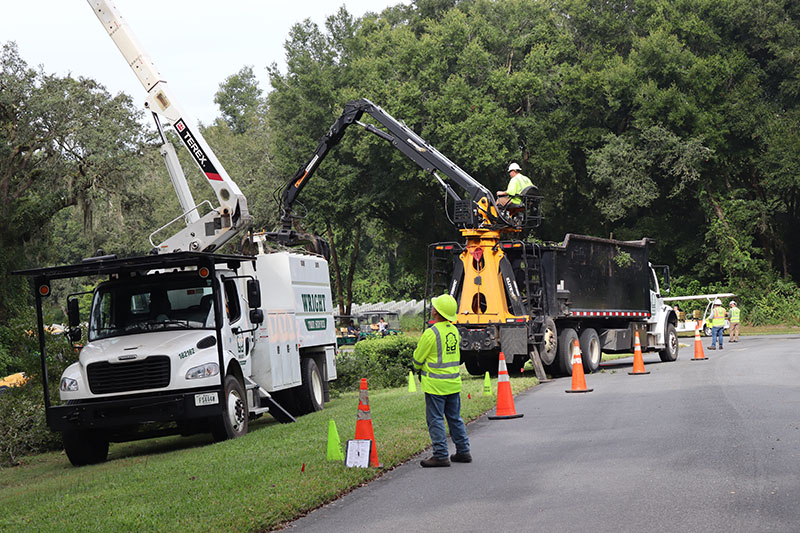
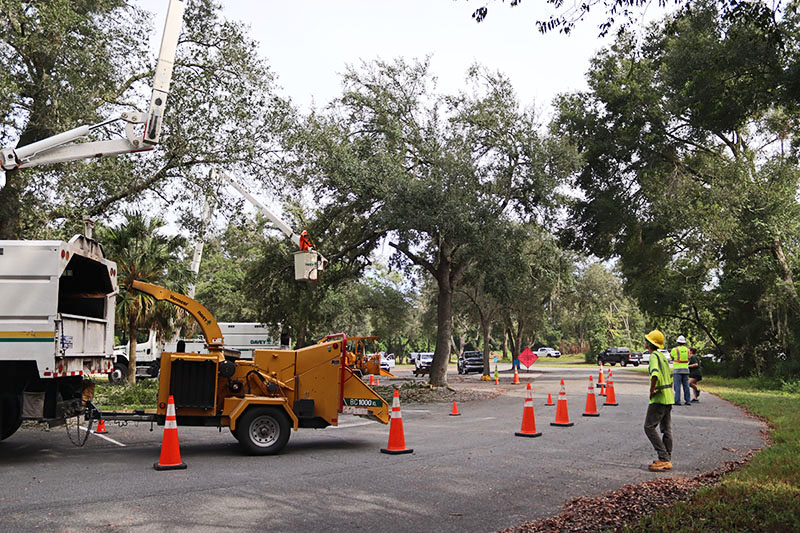
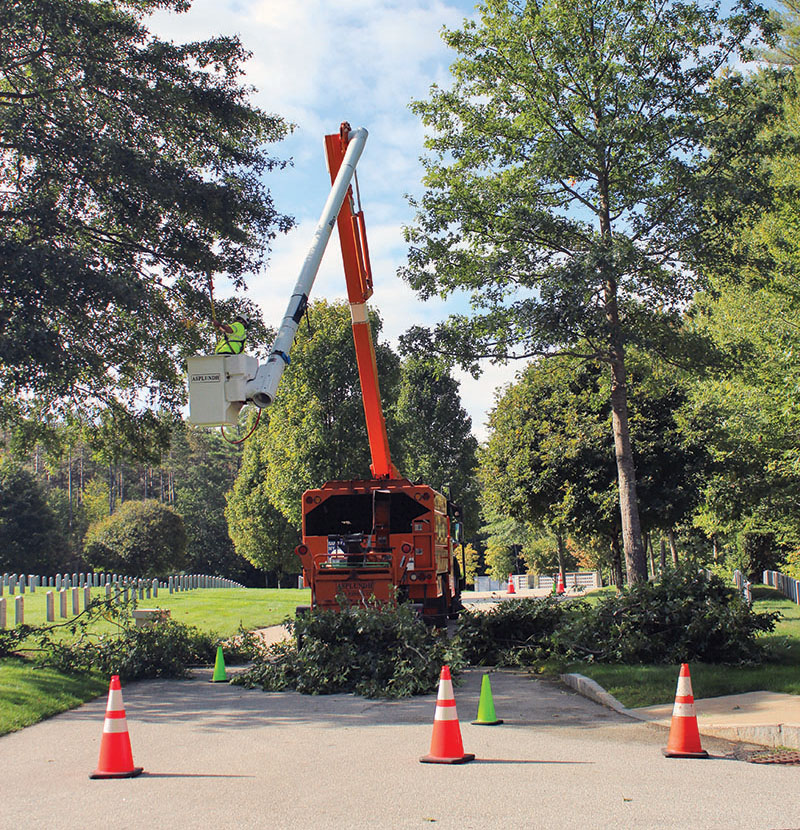
On commercial or public sites, the crew may need cones, caution tape, barricades, signage, spotters, traffic-control measures, or temporary walkway closures. If the work affects a road or sidewalk, local traffic-control requirements and permits may apply. A single warning sign is rarely enough where pedestrians can easily enter the hazard area.
The level of access control should match the level of exposure. A quiet backyard with one informed homeowner requires different measures than a tree removal beside a busy public sidewalk.
Access-control measures may include:
- Cones or barricades around work areas.
- High-visibility warning signs.
- Caution tape where appropriate.
- A designated ground worker acting as a watchperson.
- Temporary closures of walkways, driveways, or work entrances.
- Coordination with property managers, security staff, or local authorities.
- Clearly identified safe routes for residents, customers, and employees.
- Pausing work whenever an unauthorized person enters the restricted area.
The crew should never assume that members of the public understand the danger. People may be curious, distracted, wearing headphones, walking dogs, or attempting to retrieve a vehicle or personal item. Ground workers must remain alert to changing access conditions.

Assign Roles and Responsibilities
Drop-zone safety works best when responsibilities are clearly defined. Every worker should know who is in charge of the overall job, who communicates with the climber, who monitors public access, and who manages ropes or equipment.
The climber is responsible for evaluating conditions in the tree, communicating intended cuts, and avoiding releases until the area has been confirmed clear. The climber should not rely solely on visual assumptions; ground conditions can change quickly.
The designated ground lead or qualified crew member should confirm that the drop zone is clear before authorizing a cut or lowering operation. This person may also coordinate the ground crew, monitor pedestrian access, and ensure that ropes are managed safely.
Other ground workers should understand that they must not enter the drop zone to grab brush, move a rope, or speed up cleanup until the overhead hazard has ended, and the climber or ground lead has confirmed that it is safe. Productivity pressure must never override exclusion-zone discipline.
On larger jobs, it may be necessary to assign a dedicated watchperson. That person should not be distracted by feeding a chipper, operating machinery, or performing unrelated tasks. Their focus should remain on controlling access and warning the crew when conditions change.
Establish Clear Communication
Clear communication is essential whenever overhead work is underway. Before starting, the crew should agree on the words, signals, or radio procedures used to announce cuts, lower loads, stop work, and declare the area clear.
Simple, consistent commands are generally the most effective. Examples may include:
- “Stand clear.”
- “Rope coming down.”
- “Lowering.”
- “Cutting.”
- “Heads up.”
- “Stop.”
- “All clear.”
The exact words may vary by company, but everyone on the crew must understand them. A command should be given loudly enough for the intended workers to hear or communicate through reliable radios when noise, distance, or equipment makes verbal communication difficult.
Before releasing material, the climber should receive confirmation that the area is clear through an agreed-upon command-and-response procedure. Ground workers should not treat a warning call as merely informational. When a warning is given, they should immediately identify the hazard and move to a safe location if necessary.
Communication becomes especially important around chippers, chainsaws, loaders, stump grinders, and other noisy equipment. A worker operating machinery may not hear a climber’s warning. The job plan should address whether certain equipment must stop during cutting or rigging activities.
Keep Ground Crews Out of the Line of Fire
Ground workers are frequently exposed to hazards when they stand too close to the tree, directly beneath a climber, or within the expected path of material. The desire to work efficiently can lead people to enter the drop zone prematurely to drag brush, coil ropes, or prepare for the next piece.
A disciplined crew separates overhead work from ground cleanup whenever possible. Once material has landed and the climber has paused cutting, the ground crew may enter to process debris – but only after confirming that no additional overhead material is being released.
Ground workers should also avoid standing at the base of the tree unless their task requires it, and the area has been confirmed safe. The base of the tree can be a high-risk location because it may be directly beneath the climber, rigging points, falling debris, or potential tree failure.
When handling ropes, workers should position themselves so they can escape if a load shifts or a rope moves unexpectedly. They should avoid wrapping ropes around their hands, standing in bights, or positioning themselves where they could be pulled into equipment, struck by a line, or caught by a moving load.

Adjust the Drop Zone as Work Progresses
A drop zone is not permanent. It must be reevaluated throughout the job.
As branches are removed, the structure of the tree changes. Wind exposure may increase, rigging points may move, and the direction of future cuts may change. The work area may also become more cluttered with brush, logs, ropes, and equipment, creating new trip hazards or blocking escape routes.
The crew should reassess the drop zone when:
- The climber changes work positions.
- The type or size of material being removed changes.
- Rigging systems are installed, moved, or modified.
- Wind speed or direction changes.
- Rain, lightning, ice, or poor visibility develops.
- A new worker, client, pedestrian, or vehicle enters the site.
- Equipment is repositioned.
- The work moves closer to utilities, structures, roads, or public areas.
- The tree exhibits unexpected movement, cracking, decay, or instability.
Stopping briefly to reassess is a professional safety practice, not time wasted. A changing jobsite requires changing controls.
Special Considerations Near Roads, Utilities, and Structures
Some jobs require expanded drop zones and additional controls because the consequences of a falling object may be greater.
Roads and Public Access Areas
Near roads, crews should account for moving vehicles, cyclists, pedestrians, and parked cars. Traffic-control plans may be necessary, and work should not proceed until the required lane, sidewalk, or roadway controls are in place.
Utilities
Near utilities, energized conductors create a serious additional hazard. Tree workers must follow applicable electrical safety requirements, maintain required clearances, and involve qualified utility personnel where needed. A drop zone does not eliminate electrical hazards; it is only one part of a larger control strategy.
Houses and Other Structures
Near houses and other structures, free-dropping material may be inappropriate. Rigging, controlled lowering, cranes, aerial devices, or alternative work methods may be necessary. The drop zone should include the potential travel path of material if a piece swings, breaks, or is inadvertently released.
Conclusion
Setting up a drop zone is one of the most fundamental parts of safe arboricultural work. It requires more than placing cones beneath a tree. A proper drop zone is based on a thoughtful assessment of falling-object hazards, load paths, work methods, terrain, public access, communication needs, and changing site conditions.
ANSI Z133 safety standards emphasize the importance of keeping workers and others clear of exposure areas during tree care operations. Crews should establish exclusion zones before overhead work begins, maintain control of those areas, communicate clearly, and stop work whenever the zone is compromised.
A well-managed drop zone is not simply a boundary around the work. It is an active safety system – one that changes with the tree, the crew, and the conditions of the jobsite.
About the Author
Dane Buell is the past chairman of the ANSI A300 committee and TCIA representative. With over 30 years of experience, Buell holds several leadership roles in the tree care industry.