Working in Tight Spaces
Without Cutting Corners


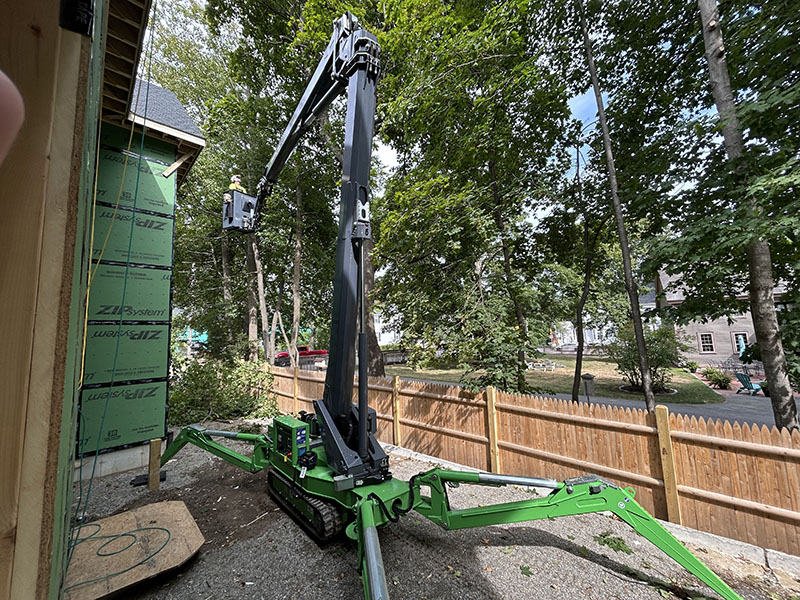
For many arborists, space is a luxury. Small backyards, built-up urban areas, narrow access points, and even indoors, often leave little room for equipment, debris, or even a basic setup.
And yet, trees still need care in all of these places.
So, how do arborists overcome this challenge? We talked with a few industry experts who shared that with the right planning, equipment, and expertise, tree care workers can handle tight workspaces safely and effectively.
Planning becomes a priority
Working in large, open spaces gives arborists flexibility in how they can approach the job. In tight spaces, that flexibility diminishes, and planning becomes critical.
“When you’re working in packed suburban or city areas, the biggest thing that changes is how little room for error you have,” said Jamie Mairs, business line director for Green-Tec.
That means every plan has to account for restricted access and nearby obstacles including buildings, cars, and other structures.
“For the guys up in the tree, it usually means far more controlled, sectional work because there’s rarely a clean drop zone. You’re dealing with power lines, roofs, fences, and traffic, so every cut has to be planned,” Mairs said.
But the challenges don’t end there. As soon as branches and debris hit the ground, swift and pre-planned cleanup is a crucial task.
“On the ground, it’s just as challenging — feeding chippers in narrow driveways, moving timber through side gates, managing the public walking past. That’s where a good kit and good planning really earn their keep,” he said.
According to Levi Williams, an ISA certified arborist at Tree Scouts Tree Service, planning is the number one deciding factor in whether a job in tight spaces can be done safely and effectively. One of the first steps, he said, is to determine what gear and equipment will fit safely in the space. It’s also important to consider the gear that climbers will need in the canopy.
“A climber will have to use specialized rigging equipment, which can include pulleys and rigging blocks to safely let down large wood at a controlled pace,” he added.
When faced with a really tight or awkward site, Mairs’ reiterated: “The biggest tip I can give is to slow down at the planning stage.”
He advises arborists to think carefully about how material comes down and plan where it will go. If you’re using machines, it can help to set machines up once and then work towards them rather than constantly repositioning them. Breaking material down into manageable sizes early on nearly always saves time later.
Safety is another important part of the plan. Protocols should account for everyone and everything on-site. This includes pedestrians walking through the work site.
“All safety protocols and gear will have to be communicated to every part of the tree crew, including the groundsmen and the climbers,” Williams said.
The right machines can help you succeed
Once a plan is in place, the next step is to choose the right equipment.
Tight spaces require proper equipment that can access the area and still perform.
“When it comes to planning small worksites that still need serious capability, we always encourage customers to work backwards from access,” Mairs said. “There’s no point spec’ing a big machine if you can’t physically get it to where the work is.”
That could mean using smaller, more compact equipment that can fit through narrow entry points before being deployed on-site, such as Green-Tec compact lifts or other similar machines.
Some larger equipment can still be used if they offer features like all-wheel steering which make a machine nimbler when working around close obstacles, Mairs said.
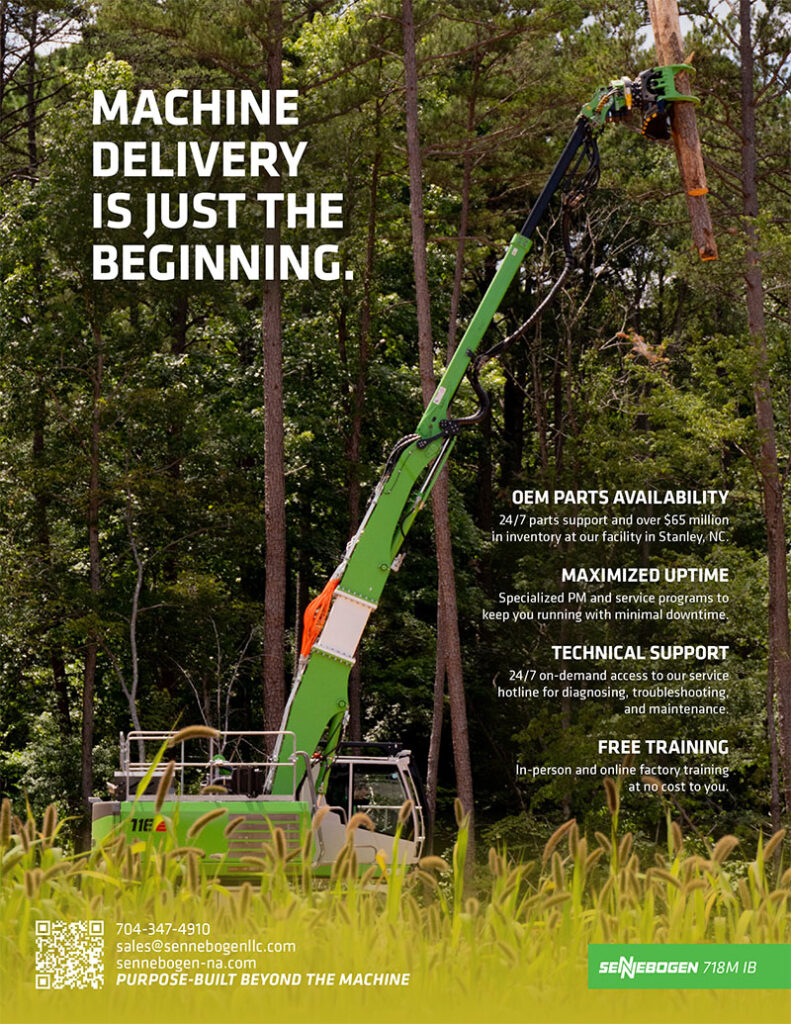
Another option is to use machine attachments. When used correctly, some attachments can help make a machine more versatile. This allows crews to handle multiple tasks with fewer machines. A few examples of this include stump grinders and mulchers.
Does the job still require large equipment? They don’t have to be ruled out if you can find a creative, safe, and effective way to include them on the worksite.
“We see plenty of successful jobs where larger machines stay at the roadside, while smaller units handle harder-to-access material,” Mairs said.
It’s important to remember that the most successful arborists in these situations are the ones who properly plan and incorporate the best and optimal equipment for the job.
“It’s about being flexible, not forcing equipment into places it shouldn’t go,” Mairs concluded.
Working indoors presents unique challenges
Surprisingly, tree work isn’t limited to the outdoors. In fact, tight access and spaces can go a step further — indoors.
“Interior work is very different from exterior work,” said Shane Pliska, CEO of Planterra Interior Landscaping. “Site access and mobilization is very time consuming as it requires many layers of permissions and clearances for most interior facilities.”
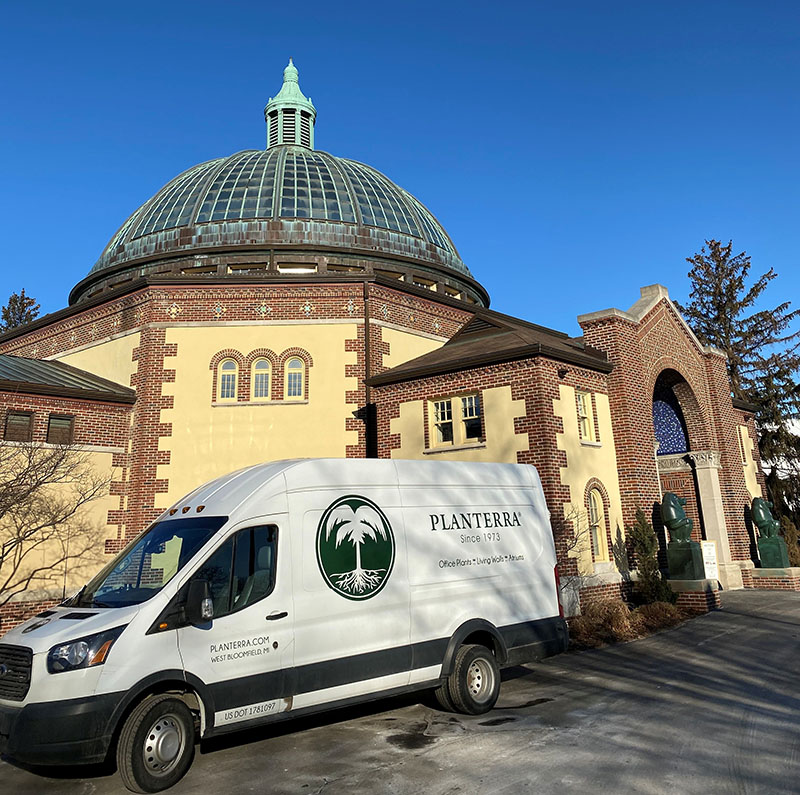
Planterra specializes in providing interior landscaping services — a niche that covers plants and trees inside office buildings, botanical gardens, and other indoor spaces. That means the company’s arborists are facing challenges that tree trimmers working outside don’t have to consider.
“When we work indoors, we are working within enclosed spaces that have major limitations, such as elevators, door openings, fine furnishings and building occupants,” he said.
Beyond a building’s physical constraints, the surrounding environment must be protected. Everything that’s around the plants and trees has to be considered — including every cut and movement to protect what’s below and around the crew. Specialty work like this often requires protective materials, like tarps to prevent damage.
“Protecting interior surfaces is mandatory,” Pliska said. “These spaces often have very high-end furnishings and artwork, so any damage can be a serious situation and requires an arborist who has experience with keeping the site clean, orderly and safe.”
It’s also important to take into consideration environmental restrictions that apply to indoor work.
“Inside, we are using scissor lifts, boom lifts or ladders, all of which are electric powered only as we cannot have a gas machine inside the space,” Pliska explained.
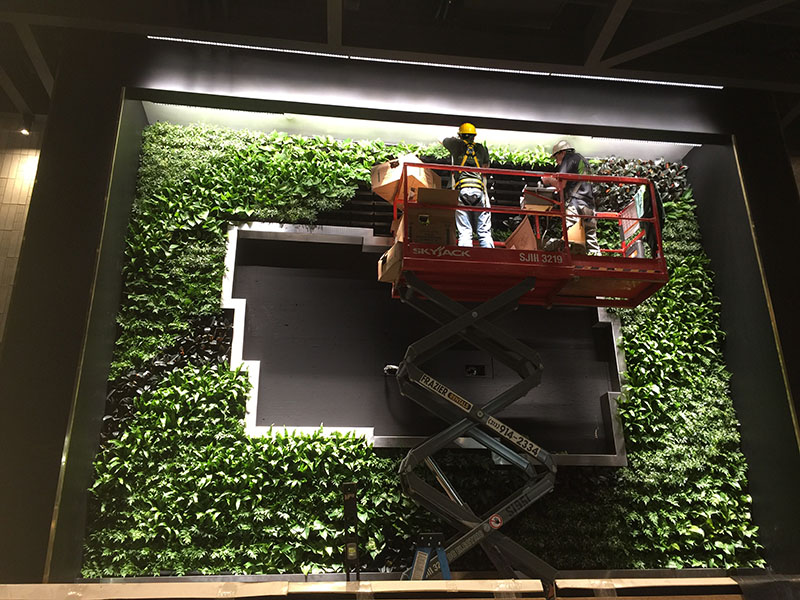
For Planterra, that typically means relying on compact, electric-powered equipment that meets building requirements such as a scissor lift.
Despite these unique constraints, Pliska said the fundamentals are the same: clear communication, careful planning, excellent customer service, and strict safety protocols.
No room for error
Narrow backyards, crowded streetscapes, and interior landscapes all pose the same challenge — they’re tight working spaces that require arborists to approach each job differently and with precision.
In these environments, there’s less flexibility, more variables to consider, and less margin for error. What might be viewed as a simple job in the field easily becomes a challenge when the work area is more compact and limited. This forces tree care crews to pivot in their thinking, planning, and operations.
But even when space is limited, the fundamentals remain the same: careful planning, choosing the right equipment, and implementing safety protocols helps to ensure everyone on and around the worksite is protected.
Taking these steps is critical to helping crews adapt and successfully complete the job, even in the smallest work areas. And the arborists who can apply these concepts — agile thinking despite constraints and adjusting their approach in confined environments — will be the ones best positioned for success.